The Hidden Cost of Untreated Industrial Wastewater—And How to Fix It
Discover the hidden financial and environmental costs of untreated industrial wastewater and how an efficient ETP can reduce risks, improve water reuse, and support sustainable operations.
Introduction
Most facilities treat wastewater like it's someone else's problem.
It leaves the production floor, goes down a drain, and that's the end of it—at least, that's how it feels.
But for a working industrial facility, that mindset gets expensive.
Wastewater that isn't handled properly doesn't just sit there quietly. It creates environmental risk, pulls in regulators, slows down operations, wastes water you already paid for, and adds costs that don't show up until later. What looks like a simple drainage issue can end up touching almost every part of the business.
Here's the thing, though—wastewater doesn't have to stay waste.
Treat it properly with the right industrial wastewater treatment system, and that effluent can reach a quality good enough to reuse. Suddenly you're not just disposing of water. You're managing it.
The Cost That Never Shows Up on the Water Bill
Ask most businesses what water costs them, and they'll point to the freshwater bill. Amount used, amount paid, done.
But that's not the whole picture. Not even close.
Look at what actually happens once water enters a facility:
Freshwater → used in production → becomes contaminated effluent → treated or dumped → freshwater bought again
If the treated water never gets reused, that cycle just keeps going. Buy, use, discharge, buy again.
A solid wastewater strategy tries to break that loop — treat what can be treated, recover what can be recovered, and stop paying twice for the same water.
What Goes Wrong When Wastewater Isn't Managed Well
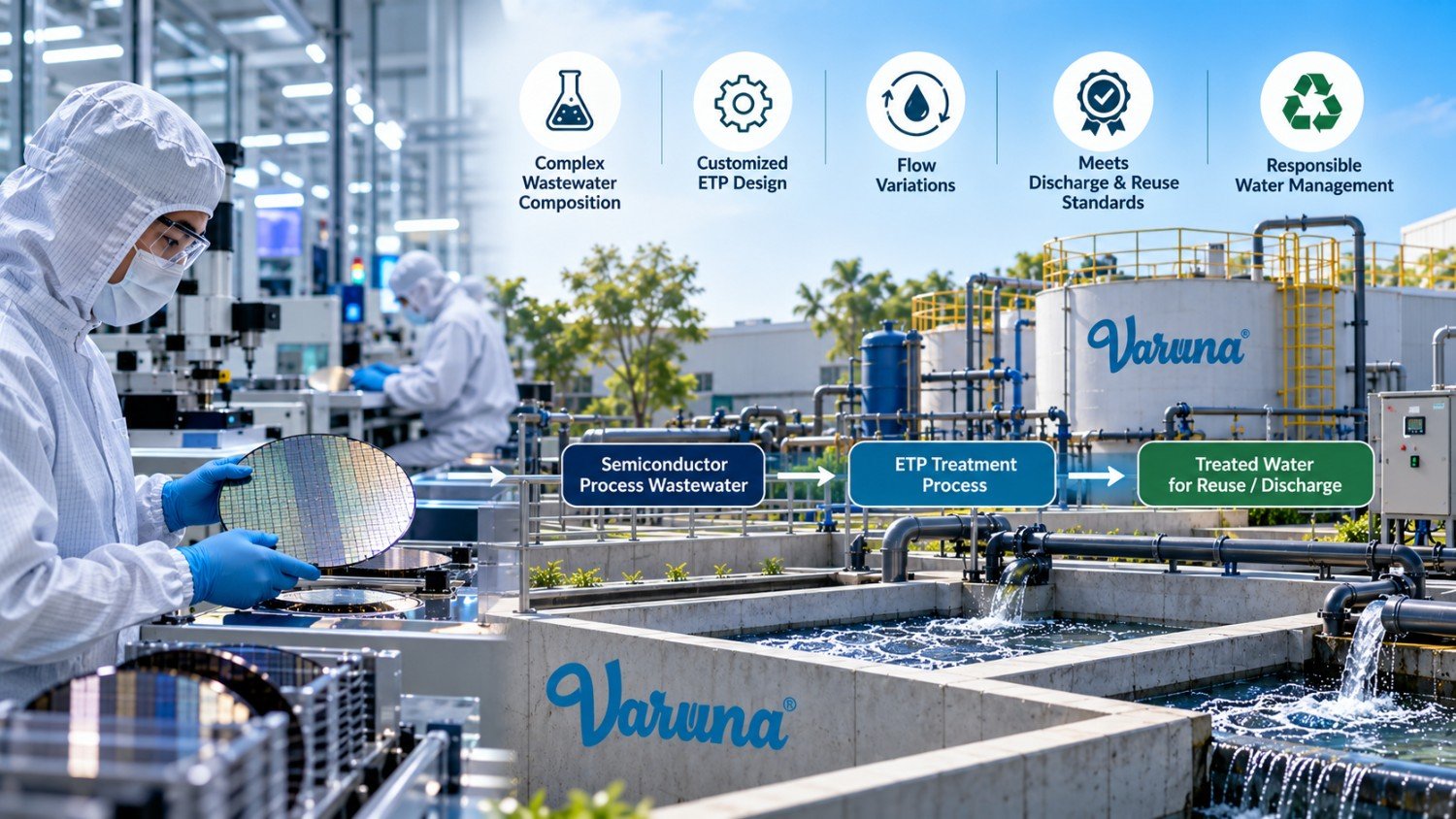
Every industry's wastewater looks different. A textile plant's effluent has almost nothing in common with what a pharma unit or an auto workshop produces.
Depending on the process, industrial effluent might carry:
- Suspended solids
- Oils and grease
- Organic waste
- Chemical residue
- Detergents
- Dissolved solids
- Heavy metals
- Contaminants specific to that process
What's actually in the water depends on raw materials, the manufacturing steps, cleaning routines, whatever chemicals the plant runs on.
Which is exactly why picking an industrial wastewater treatment system based only on plant capacity doesn't really work. You need to know what's actually in the water first — capacity is step two, not step one.
Cost 1: Water You're Throwing Away That You Didn't Need To
Here's a big one people miss — treating every drop of used water as garbage, when a good chunk of it could actually be reused.
Facilities using a lot of water often have real opportunities to reuse treated water for things like:
- Cleaning floors and equipment
- Landscaping and gardens
- Certain cooling applications, where it fits
- Flushing
- Other approved non-drinking uses
Whether it's actually suitable depends on the water quality and what you're using it for.
Get the reuse system designed right, and freshwater demand drops. Resource use gets more efficient across the board.
The real question isn't "how do we treat this water." It's:
How much of this can we safely bring back into use?
Cost 2: Compliance Risk and Environmental Fallout
Discharge untreated or poorly treated wastewater, and you're opening the door to environmental problems. Simple as that.
Depending on the effluent and the local rules, there are usually specific requirements around treatment and discharge that industries need to meet.
Get it wrong, and you're looking at:
- Regulatory trouble
- Forced corrective action
- Operations grinding to a halt
- Real environmental damage
- Reputation taking a hit
Which is why an Effluent Treatment Plant (ETP) isn't just some equipment sitting in a corner of the facility. It's a core part of running things responsibly.
And the treatment process itself needs to actually match the wastewater — not some generic template pulled off a shelf.
Cost 3: Water Wasted Through Inefficient Operations
Water in an industrial facility does a lot more than plumbing and drinking fountains.
It shows up in:
- Manufacturing steps
- Equipment cleaning
- Processing
- Cooling systems
- Washing
- General utility work
Without a clear plan for recovering that water, it just moves through the facility once and disappears.
Which means the business ends up stuck in the same loop again:
Buy freshwater → use it → treat it as waste → buy freshwater again.
A better approach looks at the entire water cycle in the facility — not just what happens at the final drain.
Cost 4: Emergency Repairs Nobody Budgeted For
Bad wastewater handling doesn't just create environmental issues — it breaks equipment too.
Too much oil, grease, solids, or chemicals in the wastewater, handled the wrong way, and you start damaging drains, pumps, pipelines, tanks, treatment equipment. All of it.
Regular monitoring and the right pretreatment steps go a long way toward avoiding this.
Which is also why ETP maintenance shouldn't be a thing you only think about after something breaks. Routine inspection, sludge management, equipment checks, keeping the process under control—that's what keeps performance steady over time, not emergency callouts.
Cost 5: Business You Never Even Knew You Lost
Sustainability isn't a nice-to-have anymore. It's increasingly part of how companies pick suppliers, partners, and long-term investments.
A facility that manages its wastewater properly looks a lot better to a potential partner than one that's just dumping effluent and hoping nobody checks.
For businesses in water-heavy industries, responsible treatment isn't just compliance — it plays into bigger sustainability goals too.
Done right, an ETP becomes part of something bigger:
Resource Efficiency + Water Conservation + Environmental Responsibility
So What's the Actual Fix?
There's no single ETP design that fits every industry. None.
A food plant, an auto workshop, a pharma unit, a textile mill, a general manufacturing facility—they all produce completely different wastewater. Treating them the same way just doesn't work.
The right fix always starts with actually understanding the effluent first.
Step 1: Know Your Wastewater
Start by figuring out where the wastewater comes from and what's actually in it.
Relevant parameters usually include:
- pH
- BOD
- COD
- TSS
- Oil and grease
- TDS
- Any chemicals or contaminants specific to that process
Which ones matter depends heavily on the industry and what you're trying to achieve with treatment.
Step 2: Decide What Happens After Treatment
Design the system around the end goal, not the other way around.
Are you aiming for:
- Discharge?
- Reuse inside the facility?
- Landscaping use?
- Process reuse?
- Further downstream treatment?
- Near-zero liquid discharge?
That answer shapes which technology you need and how far the treatment has to go.
Step 3: Pick the Right Treatment Process
Depending on the wastewater, an ETP might need to run through several stages, one after another:
Pre-treatment → physical treatment → chemical treatment → biological treatment → filtration → disinfection or advanced treatment
Not every plant needs every stage — that's a common misconception.
Choose the treatment train based on what's actually in your wastewater and what quality of output you need, not on what someone else's plant is running.
Where Does an ETP Actually Fit In?
Think of a modern ETP less as a dumping ground and more as a recovery point.
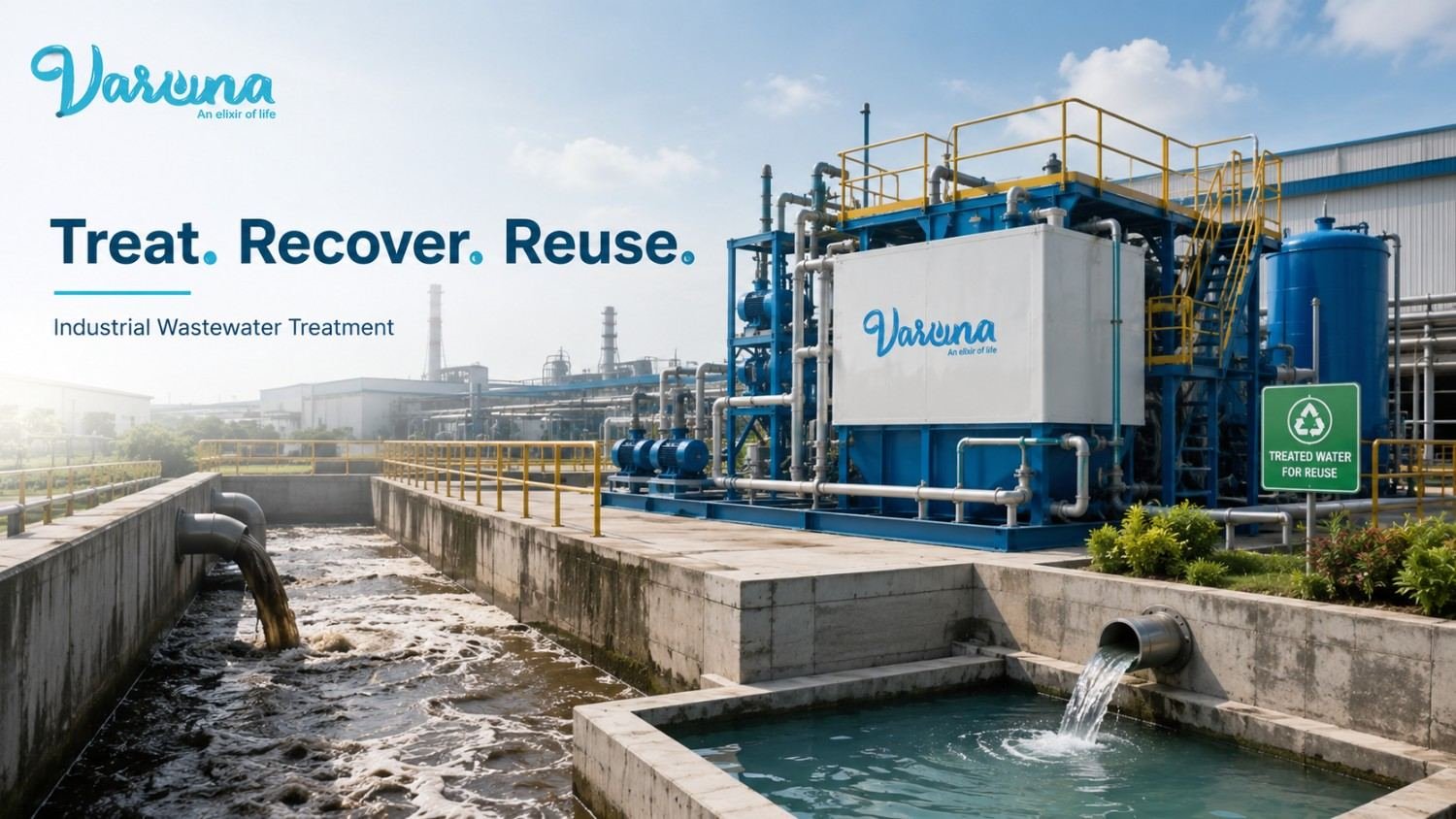
Picture a facility generating wastewater from several different areas at once. Instead of sending everything straight toward disposal, it gets collected and routed to the Effluent Treatment Plant.
The ETP does its job — treats the effluent.
Water that comes out clean enough gets redirected to wherever it's needed for reuse, while sludge and concentrated waste get handled separately, the way they should be.
That basically flips the old model: Use → discharge
into something closer to: Use → treat → recover → reuse
That shift, small as it sounds, can genuinely change how a facility manages water over the long run.
Choosing an ETP: It's Not Just About Capacity
A lot of people start the conversation with:
"What size ETP do we actually need?" — before they've even figured out what's in the wastewater. Which is backwards.
Capacity matters, sure. But it's one piece of a much bigger puzzle.
Before choosing an ETP for industries, look at:
- Wastewater quantity: how much effluent gets generated daily?
- Wastewater quality: what's actually in it, and how concentrated?
- Flow variation: is it steady, or does it spike at certain times of day?
- Treatment objective: discharge, or reuse?
- Available space: how much room do you actually have?
- Future expansion: will production grow in the next few years?
- Operating capability: who's running and maintaining this thing?
- Sludge management: where do the treatment by-products go?
A system built around these factors tends to hold up a lot better over time than one picked off a spec sheet.
Can Wastewater Genuinely Become a Resource?
Often, yes — but only when the treatment is actually designed right and the output meets whatever standard the reuse application demands.
Reuse doesn't mean dumping untreated water back into the process. That's not how it works.
It means proper treatment, ongoing monitoring, and using the water where it's genuinely suitable.
Treated water, depending on quality, might work fine for certain non-drinking uses.
This is where modern industrial water treatment stops being just about removing pollutants and starts being about something more useful:
Remove what needs removing. Recover what's still worth using.
Beyond the ETP: A Bigger Water Strategy
Installing an ETP is a solid step. But it shouldn't be where the conversation ends.
Worth looking into as well:
- Where freshwater is actually being consumed
- Which processes generate the most wastewater
- Whether clean streams and contaminated streams can be kept separate
- Where reuse opportunities exist
- Whether tweaking a process could reduce wastewater generation in the first place
- How sludge and treatment by-products get handled
- How treatment performance actually gets tracked over time
Do this properly, and wastewater management stops being a compliance checkbox. It becomes part of a real resource-efficiency strategy.
The Actual Business Case
The value of an ETP isn't always obvious right away. It builds up over time.
Some of it shows up as lower freshwater bills. Some shows up as better operational control, fewer environmental headaches, less exposure to wastewater-related problems down the line.
The strongest case usually comes from looking at the total cost of wastewater — not just the sticker price of the treatment plant.
Add it all up: Freshwater cost + treatment cost + disposal cost + maintenance risk + compliance exposure + missed reuse opportunities
That's the real number businesses should actually be looking at.
Why Varuna for Industrial Wastewater Treatment?
Varuna builds Effluent Treatment Plant solutions for industries that need reliable treatment, water recovery, and a sustainable way to manage water long-term.
Every system gets shaped around the facility's actual wastewater — its characteristics, the capacity needed, available space, and what happens after treatment.
From industrial effluent treatment to water recycling solutions, the approach stays the same: build something that fits the actual process, not a one-size-fits-all setup forced onto every industry.
If reducing wastewater-related costs while improving water management is the goal, the first step is simple — understand the problem properly before picking a solution.
Conclusion
Untreated industrial wastewater isn't just an environmental issue tucked away somewhere.
It's lost water. Wasted operational efficiency. Compliance risk. Maintenance headaches waiting to happen. Reuse opportunities slipping by unnoticed.
Installing an ETP and walking away isn't the fix.
The real fix is understanding where the wastewater comes from, what's actually in it, where it needs to go, and how much of it can realistically be recovered.
A properly designed Effluent Treatment Plant can move a facility toward something smarter: Less waste → better treatment → more reuse → smarter water management
For any business that depends heavily on water, that's not just an environmental call.
It's a business decision — and a pretty important one.