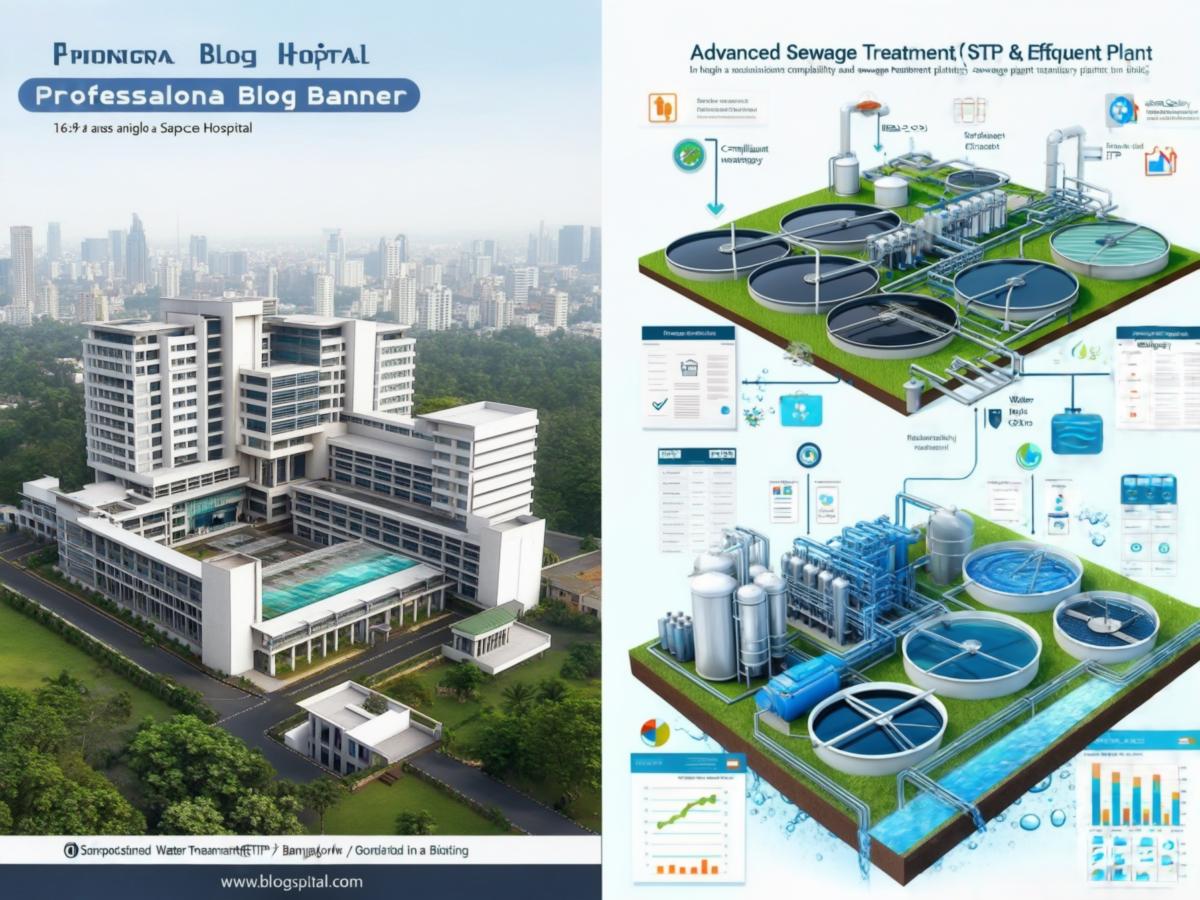
STP & ETP for Hospitals in Bangalore: Complete Compliance Guide 2026 by Varuna
Complete guide to STP & ETP for hospitals in Bangalore. Learn KSPCB norms, compliance steps, costs, and wastewater solutions for 2026.
Hospitals in Bangalore operate in one of India’s fastest-growing urban ecosystems. With expanding infrastructure, increasing patient load, and tighter environmental monitoring, wastewater management is no longer a secondary consideration — it is a compliance priority.
Every hospital generates wastewater from wards, laboratories, dialysis units, kitchens, and cleaning operations. Unlike residential sewage, hospital discharge may contain pathogens, chemical residues, and pharmaceutical traces. That is why installing STP & ETP for hospitals in Bangalore has become essential infrastructure rather than optional engineering.
In 2026, regulatory enforcement has become more structured and performance-focused. This guide explains what hospitals in Bangalore need to know about compliance, approvals, capacity planning, and sustainable wastewater management—and how Varuna supports healthcare institutions in meeting these expectations.
Why Hospitals in Bangalore Need STP & ETP Systems in 2026
Urban healthcare facilities in Bangalore face increasing environmental scrutiny due to population density and groundwater sensitivity. Discharging untreated wastewater can create serious ecological and public health consequences.
Under the oversight of the Karnataka Pollution Control Board (KSPCB), hospitals are required to ensure proper wastewater treatment before discharge.
Non-compliance may result in:
- Regulatory notices
- Penalties
- Consent suspension
- Operational disruption
Hospitals that proactively implement compliant systems, often with the technical guidance of Varuna, reduce long-term risk and operational uncertainty.
KSPCB Norms for Hospital Wastewater in Bangalore
The KSPCB regulates wastewater discharge standards for hospitals across Bangalore and Karnataka. Compliance includes both installation and operational performance.
Hospitals must obtain:
- Consent to Establish (CTE)
- Consent to Operate (CTO)
In 2026, monitoring requirements are more documentation-driven than before. Authorities assess:
- Discharge quality parameters
- Maintenance records
- Sludge management
- Flow monitoring systems
Meeting KSPCB norms is not simply about installing a plant — it requires ongoing performance consistency.
This is where compliance-focused solution providers like Varuna play a crucial role in aligning technical design with regulatory expectations.
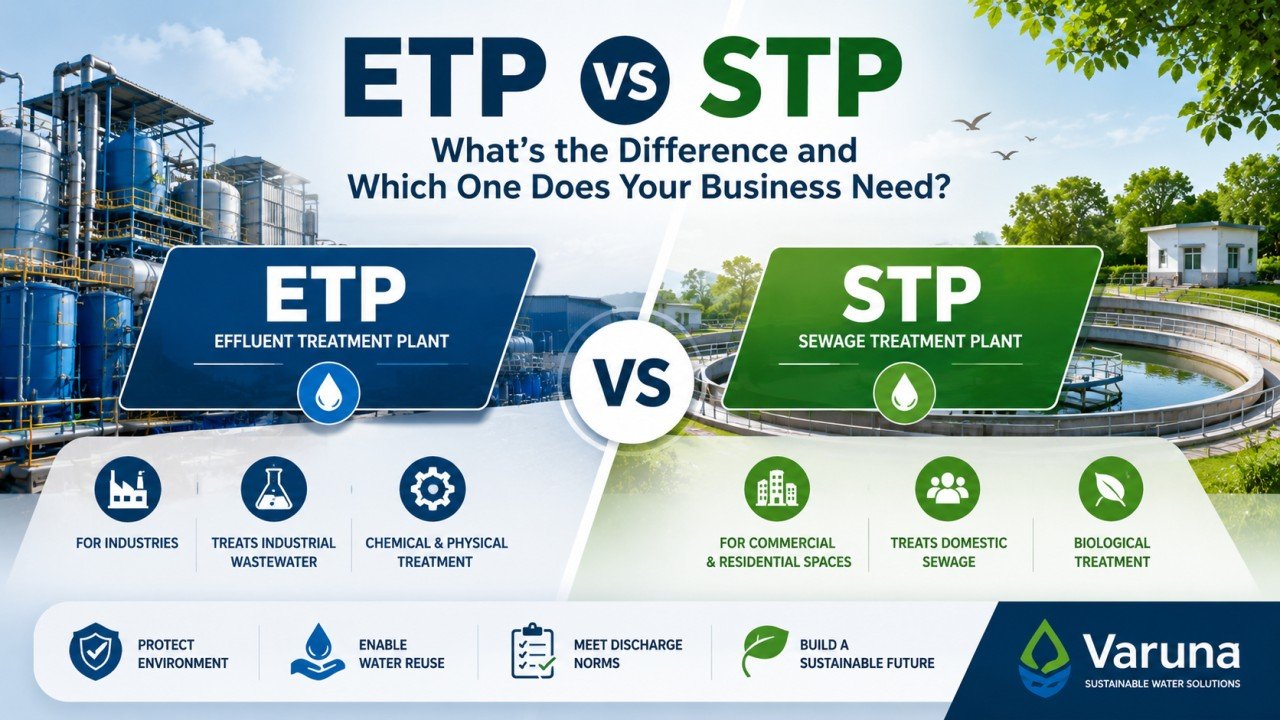
STP vs ETP for Hospitals in Bangalore: Understanding the Difference
When planning STP & ETP for hospitals in Bangalore, understanding the functional difference between both systems is essential.
Sewage Treatment Plant (STP)
An STP treats domestic wastewater generated from:
- Patient wards
- Washrooms
- Kitchens
- Administrative areas
Biological treatment processes break down organic matter before disinfection.
Effluent Treatment Plant (ETP)
An ETP treats wastewater from:
- Diagnostic laboratories
- Operation theatres
- Pharmacies
- Research units
This wastewater may contain chemical compounds that require specialized treatment beyond biological processes.
Because most hospitals in Bangalore generate both domestic and chemical effluent, dual systems are often the safest compliance approach.
Capacity Planning for Hospitals in Bangalore
Designing the right capacity for STP & ETP for hospitals in Bangalore requires more than bed count estimation.
Capacity depends on:
- Bed strength
- Daily OPD footfall
- Dialysis load
- Laboratory intensity
- Cleaning cycles
- Future expansion plans
In many Bangalore hospitals, wastewater generation fluctuates seasonally. During outbreaks or high patient influx, system load increases significantly.
Proper sizing prevents system overload — a common compliance issue identified during inspections.
Technical audits conducted by Varuna help healthcare institutions determine accurate discharge volumes rather than relying on assumptions.
Cost of STP & ETP for Hospitals in Bangalore
The cost of installing STP & ETP for hospitals in Bangalore varies based on:
- Capacity (KLD)
- Technology selection
- Civil vs modular systems
- Automation level
- Sludge handling design
Urban land constraints in Bangalore often make modular systems more practical.
Beyond installation cost, hospitals must consider:
- Energy consumption
- Chemical usage
- Preventive maintenance
- Compliance stability
Investing in a properly engineered system reduces long-term regulatory risk and water dependency.
Step-by-Step KSPCB Approval Process in Bangalore
For hospitals in Bangalore, obtaining KSPCB approval typically involves:
- Wastewater assessment
- System design submission
- Consent to Establish application
- Installation and trial run
- Performance validation
- Consent to Operate approval
Delays often occur due to incomplete documentation or undersized systems.
Working with experienced compliance partners such as Varuna ensures that documentation, plant design, and inspection readiness align with KSPCB requirements.
Compliance Challenges for Bangalore Hospitals
Healthcare facilities in Bangalore face specific operational challenges:
- Limited campus space
- High patient turnover
- Mixed wastewater streams
- Antibiotic and chemical residues
- Expansion without infrastructure upgrade
Installing STP & ETP for hospitals in Bangalore is only part of the solution. Long-term compliance depends on consistent monitoring and preventive maintenance.
Modern Wastewater Technologies for 2026
The wastewater compliance landscape in 2026 is shifting toward technology integration.
Hospitals in Bangalore are increasingly adopting:
- IoT-based monitoring systems
- Energy-efficient aeration technologies
- Compact modular STP designs
- Advanced treatment for antibiotic residue control
Forward-thinking healthcare institutions are prioritizing performance transparency — an area where Varuna integrates monitoring and automation within its STP & ETP solutions.
Why Choose Varuna for STP & ETP in Bangalore?
When selecting a partner for STP & ETP for hospitals in Bangalore, hospitals should evaluate:
- Regulatory experience
- Design accuracy
- Documentation support
- Upgrade flexibility
- Long-term operational planning
Varuna specializes in compliance-focused wastewater solutions tailored for hospitals in Bangalore. With experience navigating KSPCB approval processes, Varuna ensures technical precision and regulatory alignment from design to commissioning.
Rather than treating wastewater systems as isolated installations, Varuna approaches them as compliance assets integrated into hospital infrastructure.
Final Thoughts
In 2026, environmental compliance for hospitals in Bangalore is more structured and closely monitored than ever before.
Installing properly designed STP & ETP for hospitals in Bangalore ensures:
- Regulatory compliance
- Environmental protection
- Operational continuity
- Sustainable water reuse
- Institutional credibility
Hospitals that adopt a proactive compliance strategy—supported by experienced partners like Varuna — position themselves for long-term stability.
Responsible wastewater management is no longer a backend function. It is foundational healthcare infrastructure.
Ready to Upgrade Your Hospital’s Compliance Framework?
If your hospital in Bangalore is planning installation, expansion, or regulatory review, a structured wastewater strategy can prevent costly compliance setbacks.
Varuna provides:
- STP & ETP system design
- KSPCB documentation support
- Capacity audits
- Upgrade planning
- Long-term O&M assistance
Take a proactive approach to hospital wastewater compliance in 2026.
Connect with Varuna to evaluate your existing infrastructure and build a wastewater treatment system that aligns with regulatory expectations in Bangalore.
Because in healthcare, what happens behind the scenes protects everything happening inside.