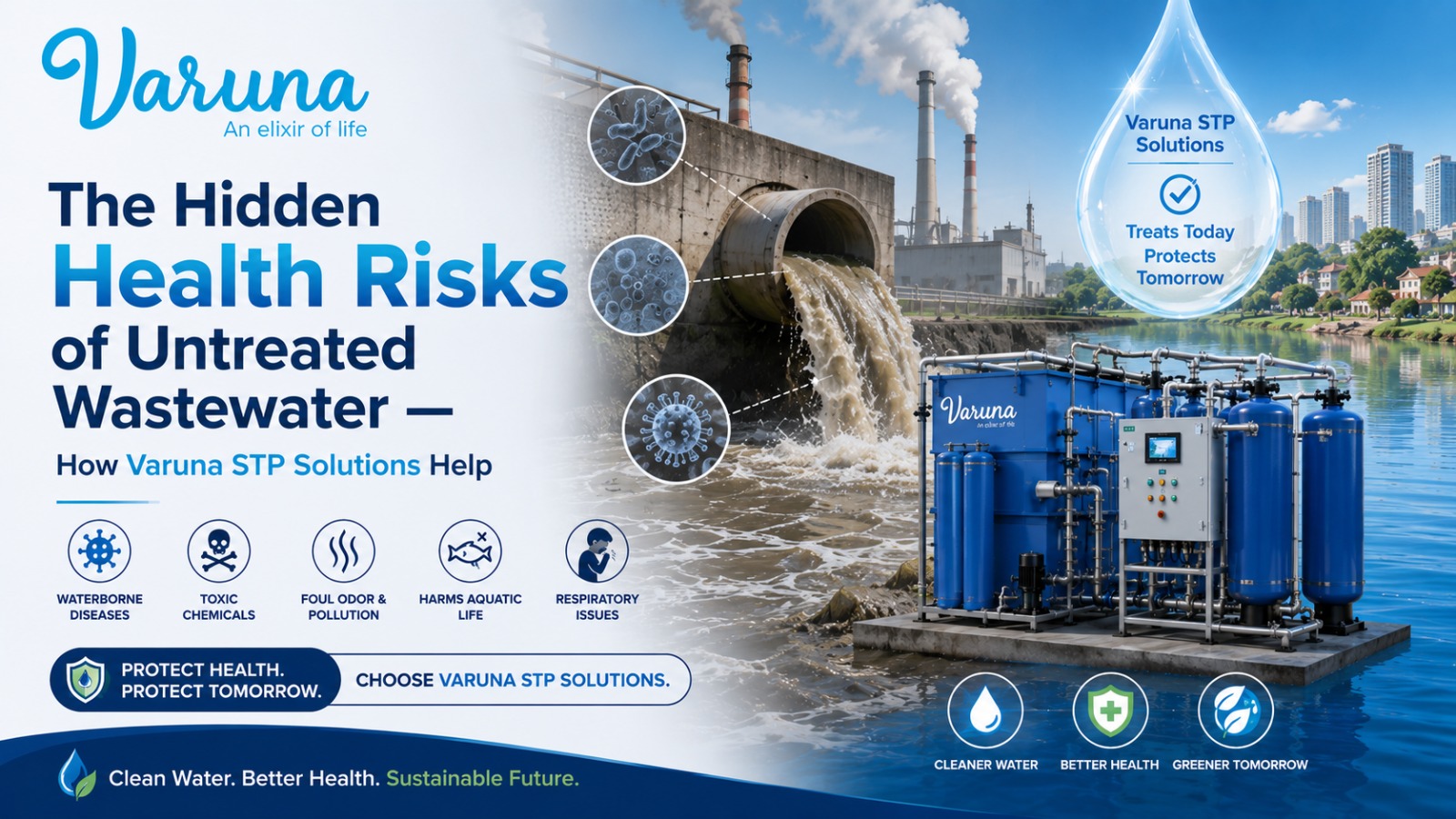
The Hidden Health Risks of Untreated Wastewater — How Varuna STP Solutions Help
Learn how Varuna Eco helps prevent health and environmental risks caused by untreated wastewater through advanced STP solutions and sustainable water treatment systems.
Most People Notice Dirty Water. Very Few Notice the Damage It Causes Later.
In many buildings and industrial areas, wastewater leaves the property every single day without much attention. Once it disappears into drains or pipelines, people assume the problem is over. But untreated sewage rarely stays “out of sight” for long.
Over time, poorly managed wastewater starts affecting the surrounding environment in ways that are easy to ignore at first. A bad smell near drainage areas, mosquito growth during monsoon season, dirty water collecting near disposal points — these signs usually appear before bigger health problems follow.
Across India, rising urban development has increased pressure on sewage systems. Residential societies, hotels, hospitals, restaurants, and industries now generate far more wastewater than older infrastructure was designed to handle. Because of this, the demand for reliable wastewater treatment solutions and advanced STP solutions continues to grow.
What many facilities fail to realize is that untreated sewage does not only damage the environment. It can also affect public hygiene, groundwater quality, and long-term health conditions in nearby areas.
Why Untreated Wastewater Creates Bigger Problems Than Expected
Wastewater contains much more than dirty water from sinks and drains. In most commercial and residential facilities, sewage includes:
-
harmful bacteria
-
chemical residue
-
oil and grease
-
organic waste
-
suspended solids
-
disease-causing microorganisms
Without proper treatment, these contaminants move into nearby drainage systems, open land, rivers, or underground water sources.
The problem becomes more serious in densely populated areas where people depend heavily on shared water resources. In many cities, groundwater already faces contamination risks due to poor sewage disposal practices.
This is one of the main reasons modern sewage treatment plant systems are becoming essential instead of optional.
The Link Between Untreated Sewage and Public Health Risks
Most wastewater problems develop slowly. That is why many people underestimate them.
A leaking drainage system or untreated discharge may not create immediate visible damage. However, continuous exposure to contaminated water increases health risks over time.
-
Waterborne Diseases Spread Faster Than People Realize
Untreated sewage often carries bacteria and viruses that spread through contaminated water sources.
In many cases, this increases the risk of the following:
-
typhoid
-
cholera
-
diarrhea
-
hepatitis
-
skin infections
During heavy rainfall or flooding, untreated sewage can mix with nearby water bodies and spread contamination even further.
Children and elderly individuals usually face greater risk because of weaker immunity.
-
Groundwater Contamination Is Difficult to Reverse
Many communities still depend on groundwater for washing, cleaning, and daily use. The problem is that untreated wastewater slowly seeps into the soil and affects underground water quality.
Once contamination reaches groundwater, restoring safe water conditions becomes extremely difficult and expensive.
What starts as poor sewage management can eventually become a larger public health issue affecting entire neighborhoods.
This is why businesses and residential facilities now invest more in proper sewage water treatment systems.
-
Bad Odor Is Often a Warning Sign
People usually treat foul odor as a temporary inconvenience. In reality, unpleasant smell around sewage areas often indicate bacterial activity and poor wastewater handling.
In commercial spaces such as hotels, hospitals, and residential societies, poor odor control can affect:
-
hygiene standards
-
customer experience
-
employee comfort
-
overall environmental quality
Modern STP solutions help control these issues by treating wastewater before it creates larger sanitation problems.
Mosquito Growth and Hygiene Problems Increase Quickly
Stagnant wastewater creates the perfect environment for insects and mosquito breeding.
This issue becomes especially common during monsoon months when drainage systems already face a heavy load.
As wastewater collects in open or untreated areas, the chances of mosquito-related diseases also increase. In many urban areas, poor wastewater handling contributes to:
-
dengue outbreaks
-
malaria risks
-
unhealthy living conditions
Simple drainage management is no longer enough. Facilities now require smarter wastewater management solutions that support both sanitation and environmental safety.
Why Older Wastewater Systems No Longer Work Efficiently
Many traditional sewage systems were designed years ago when population density and water usage were much lower.
Today, the situation is very different.
Large residential projects, hospitals, hotels, malls, and industrial units generate massive amounts of wastewater every day. Older systems often struggle to treat this volume properly.
As a result, facilities commonly face the following:
-
overloaded drainage systems
-
foul odor problems
-
untreated discharge
-
maintenance issues
-
pollution control challenges
This growing pressure has increased the need for advanced STP solutions that can handle wastewater more efficiently.
Understanding STP Systems in Simple Terms
A sewage treatment plant treats wastewater before disposal or reuse.
The goal is simple:
remove harmful contaminants and improve water quality.
Most STP systems work through multiple stages:
-
wastewater collection
-
filtration
-
biological treatment
-
sludge separation
-
treated water discharge or reuse
After treatment, facilities can often reuse water for:
-
gardening
-
flushing
-
cleaning
-
cooling systems
This not only improves hygiene but also helps reduce freshwater consumption.
How Varuna STP Solutions Help Facilities Manage Wastewater Better
Varuna provides advanced STP solutions designed for modern residential, commercial, and industrial requirements.
Instead of treating wastewater management as just a compliance activity, Varuna focuses on long-term sustainability and operational efficiency.
-
Better Wastewater Treatment Efficiency
Modern treatment systems help reduce contaminants, suspended solids, and harmful pollutants more effectively.
-
Cleaner and Safer Surroundings
Proper treatment reduces foul odor, stagnant wastewater accumulation, and sanitation-related concerns.
-
Water Reuse Support
Treated water can be reused for secondary applications, helping facilities reduce freshwater dependency.
-
Lower Long-Term Operational Challenges
Smart system design helps improve performance while reducing maintenance difficulties over time.
-
Support for Sustainable Infrastructure
Efficient wastewater treatment solutions help organizations move toward cleaner and more responsible operations.
Why Wastewater Treatment Is Becoming More Important in India
India already faces growing pressure on freshwater resources. At the same time, urban wastewater generation continues to increase rapidly.
This creates two major challenges:
-
protecting public health
-
conserving water resources
Because of this, wastewater treatment is no longer limited to industries alone. Residential societies, commercial buildings, educational institutions, and healthcare facilities now require proper sewage treatment systems as well.
The future of urban infrastructure will depend heavily on:
-
water recycling
-
sustainable treatment systems
-
smart sewage management
-
environmental compliance
Advanced STP solutions will continue playing an important role in achieving these goals.
Conclusion
Untreated wastewater creates problems that go far beyond dirty drains and unpleasant smells. Over time, poor sewage management affects groundwater quality, environmental safety, and public health conditions in surrounding communities.
Many facilities still overlook these risks until contamination, odor, or hygiene issues become difficult to manage.
This is exactly why reliable wastewater treatment solutions have become essential today.
Modern Varuna STP solutions help businesses and communities treat wastewater more responsibly, improve sanitation standards, and support sustainable water management practices for the long term.