Why Every Industry Needs a Varuna ETP: Compliance, Sustainability, and Business Benefits
Discover how a Varuna ETP helps industries achieve regulatory compliance, improve sustainability, reduce water costs, and support long-term business growth through efficient wastewater treatment.
If you ask most factory owners what keeps them awake at night, wastewater treatment probably won't be the first answer.
- Production targets.
- Raw material costs.
- Energy bills.
- Supply chain disruptions.
Those are the issues that usually dominate management meetings.
Yet wastewater has a habit of becoming important very quickly when something goes wrong.
- A failed inspection.
- A regulatory notice.
- A complaint from a nearby community.
A sudden increase in water procurement costs.
That's when many businesses realize that wastewater management isn't just an environmental responsibility.
It's a business function.
And in today's industrial landscape, it's becoming an increasingly important one.
The Days of Treating Effluent as an Afterthought Are Over
There was a time when many industries viewed wastewater treatment as a compliance checkbox.
- Install a treatment system.
- Meet minimum requirements.
- Move on.
- That approach is becoming harder to sustain.
- Environmental regulations are evolving.
- Water resources are becoming more stressed.
Customers, investors, and stakeholders are asking tougher questions about sustainability practices.
The result?
Wastewater treatment is moving from the operations department into strategic business discussions.
Not because regulations demand it.
Because businesses are recognizing its broader impact.
Why Compliance Still Matters
Let's start with the obvious reason.
Compliance.
Every industry generates some form of wastewater.
Whether it's manufacturing, food processing, pharmaceuticals, textiles, chemicals, hospitality, or commercial operations, wastewater must be managed responsibly.
Failure to meet discharge standards can create serious consequences:
- Regulatory penalties
- Legal complications
- Operational disruptions
- Reputation damage
- Increased scrutiny from authorities
Most organizations don't want to spend time worrying about environmental violations.
They want to focus on running their business.
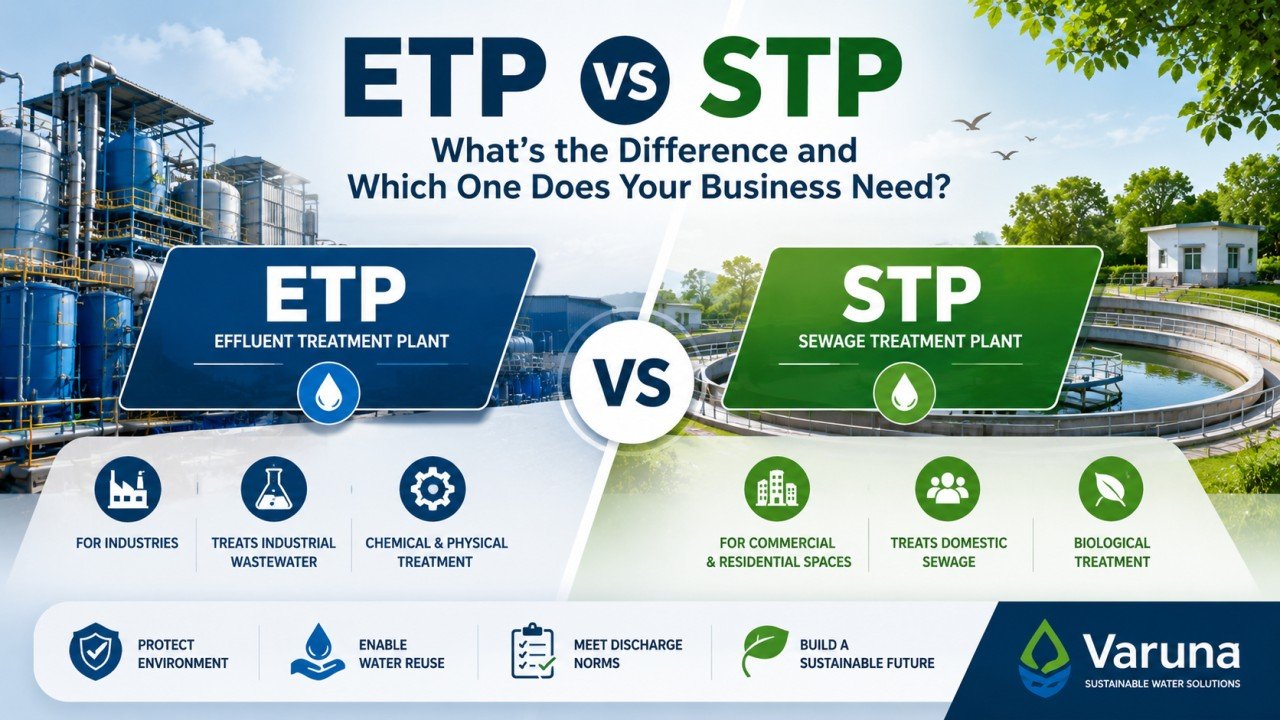
A properly designed Effluent Treatment Plant (ETP) helps create that confidence by ensuring wastewater is treated according to applicable standards before discharge or reuse.
But stopping at compliance means missing the bigger picture.
Water Is Becoming a Business Risk
One trend appears repeatedly across industries.
Water is becoming more valuable.
Many industrial facilities are experiencing the following:
- Rising water procurement costs
- Increased competition for water resources
- Seasonal supply challenges
- Growing sustainability expectations
For businesses that depend heavily on water, this creates a new operational reality.
The question is no longer
"How much water do we need?"
The question is:
"How efficiently are we using the water we already have?"
That's a very different conversation.
And it's one reason modern wastewater treatment systems are receiving greater attention than ever before.
Looking Beyond Wastewater
One of the biggest shifts happening in industrial water management is a change in perspective.
For years, wastewater was viewed as something that needed to be disposed of safely.
Today, many organizations are beginning to view it differently.
As a resource.
That may sound surprising.
But consider this:
Every liter of wastewater leaving a facility was once purchased, pumped, stored, distributed, and used within the business.
There's value in that water.
The challenge is finding ways to recover it.
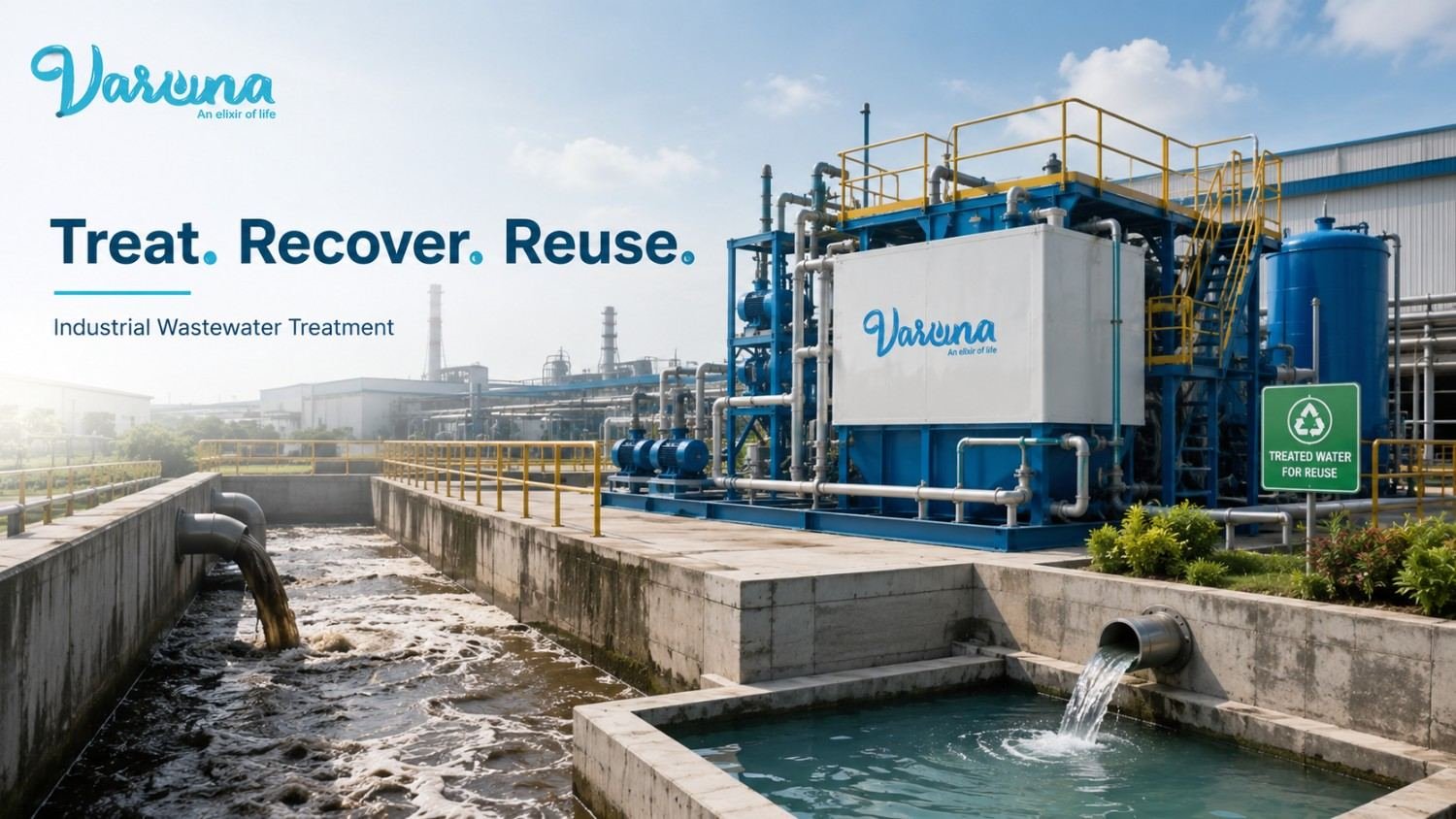
This is where effective treatment systems can create opportunities for water reuse, recycling, and improved resource efficiency.
Where Varuna ETP Fits In
This is where Varuna ETP solutions become part of a broader business strategy.
The purpose of an ETP isn't simply to treat wastewater.
The larger objective is to help industries manage water responsibly while supporting operational goals.
Depending on the application, treated water may support the following:
- Water reuse initiatives
- Resource conservation programs
- Sustainability targets
- Regulatory compliance requirements
- Long-term operational efficiency
In other words, an ETP can contribute value beyond environmental protection alone.
Sustainability Is No Longer Optional
A few years ago, sustainability reports were often viewed as something produced mainly for corporate communications.
Today, sustainability metrics are influencing investment decisions, procurement policies, and business partnerships.
Customers increasingly want to know the following:
- How products are manufactured
- How resources are managed
- How environmental impacts are controlled
This shift affects businesses across industries.
Organizations that proactively invest in environmental infrastructure are often better positioned to respond to these expectations.
Wastewater treatment plays a central role in that effort.
Not because it's visible.
Because it demonstrates responsible resource management behind the scenes.
The Financial Benefits Often Go Unnoticed
One misconception about wastewater treatment is that it's purely a cost center.
That perspective overlooks several important benefits.
A well-designed treatment system may help organizations:
- Reduce freshwater consumption
- Improve water reuse opportunities
- Lower long-term water procurement costs
- Reduce environmental liabilities
- Strengthen operational resilience
These benefits don't always appear immediately on a balance sheet.
But over time, they can contribute to meaningful business value.
Particularly in industries where water plays a critical role in production.
Different Industries, Different Challenges
Every industry faces unique wastewater challenges.
- A textile facility deals with different contaminants than a pharmaceutical manufacturer.
- A food processing plant has different treatment requirements than an engineering workshop.
That's why wastewater treatment shouldn't be approached as a one-size-fits-all solution.
Effective systems are designed around the specific characteristics of the wastewater being generated.
The goal isn't simply treatment.
It's performance, reliability, and long-term effectiveness.
Preparing for the Future
One thing seems increasingly clear.
Environmental expectations are unlikely to decrease.
Water scarcity challenges are unlikely to disappear.
Regulatory requirements are unlikely to become simpler.
Businesses that invest in sustainable infrastructure today are often better prepared for tomorrow's operating environment.
That preparation isn't just about avoiding risk.
It's about creating flexibility and resilience.
Final Thoughts
Most industries don't think about wastewater treatment every day.
And that's usually a good sign.
When a treatment system is working properly, it quietly supports compliance, sustainability, and operational performance in the background.
But its importance shouldn't be underestimated.
A modern Varuna ETP is more than a treatment system.
It's an investment in responsible growth.
It helps businesses meet environmental obligations, improve resource efficiency, and prepare for a future where water management will play an increasingly important role in long-term success.
Because in the end, effective wastewater treatment isn't just about what leaves the facility.
It's about how efficiently the entire business operates.