STP & ETP in Hospitals Explained: How Wastewater is Treated and Made Safe with Varuna’s Solutions (2026)
Understand how STP and ETP systems treat hospital wastewater. Learn processes, benefits, and reuse strategies with Varuna’s advanced solutions in 2026.
Hospitals save lives every day—but behind every successful surgery, laboratory test, and dialysis session, there is something most people never think about: wastewater.
Every hospital generates thousands of liters of used water daily. This water comes from patient wards, operation theaters, laboratories, kitchens, cleaning activities, and diagnostic centers. Unlike regular domestic sewage, hospital wastewater may contain bacteria, disinfectants, chemical residues, blood traces, and pharmaceutical compounds.
That is why STP (Sewage Treatment Plant) and ETP (Effluent Treatment Plant) systems are essential in hospitals.
In 2026, wastewater treatment is not just about compliance—it is about protecting public health and the environment. Let’s understand how it works.
What is an STP in Hospitals?
A Sewage Treatment Plant (STP) in a hospital manages wastewater from non-chemical sources such as:
- Patient bathrooms
- Washbasins
- Laundry areas
- Kitchen discharge
- Cleaning operations
This type of wastewater mainly contains organic matter and suspended particles.
The purpose of a hospital STP system is to remove impurities and restore water quality to safe discharge levels.
The Science Behind the STP Process in Hospitals
Rather than thinking of STP as a machine, imagine it as a multi-stage cleaning cycle.
Stage 1: Physical Separation
Incoming wastewater passes through mechanical screens. Solid debris is removed before the water flows forward.
Stage 2: Settling Chamber
Heavy particles sink to the bottom in settling tanks. This separates solid sludge from liquid waste.
Stage 3: Biological Treatment
Air is introduced into aeration chambers. Beneficial microorganisms consume organic pollutants. This stage significantly reduces contamination levels.
Stage 4: Clarification
Water is separated from the remaining biological residue.
Stage 5: Disinfection
Before discharge, the treated water undergoes final disinfection through UV systems or controlled chemical dosing.
After this cycle, the water becomes suitable for non-drinking reuse, such as landscaping or utility flushing.
Modern systems developed by Varuna focus on energy efficiency and stable biological performance.
What is an ETP in Hospitals?
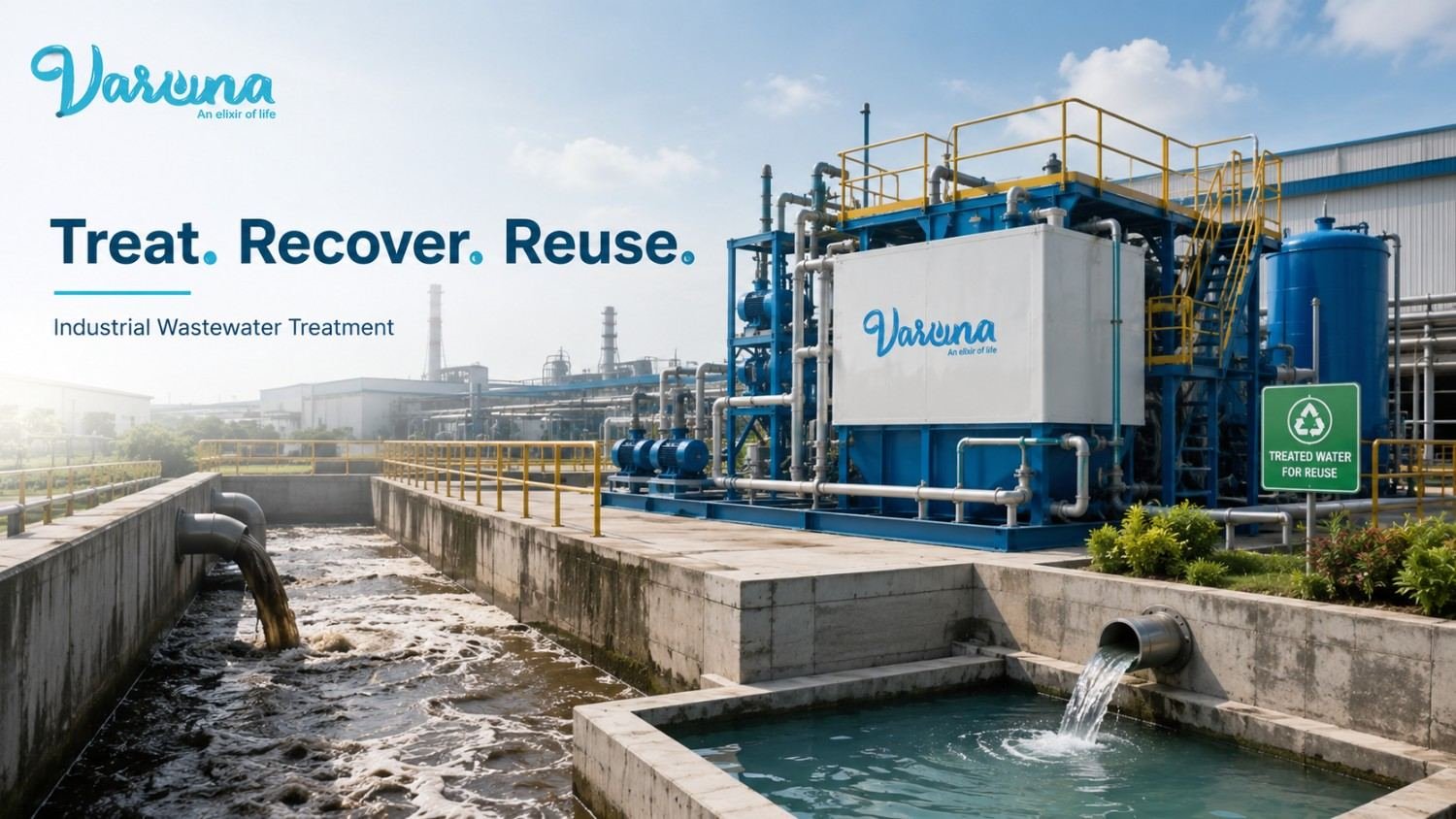
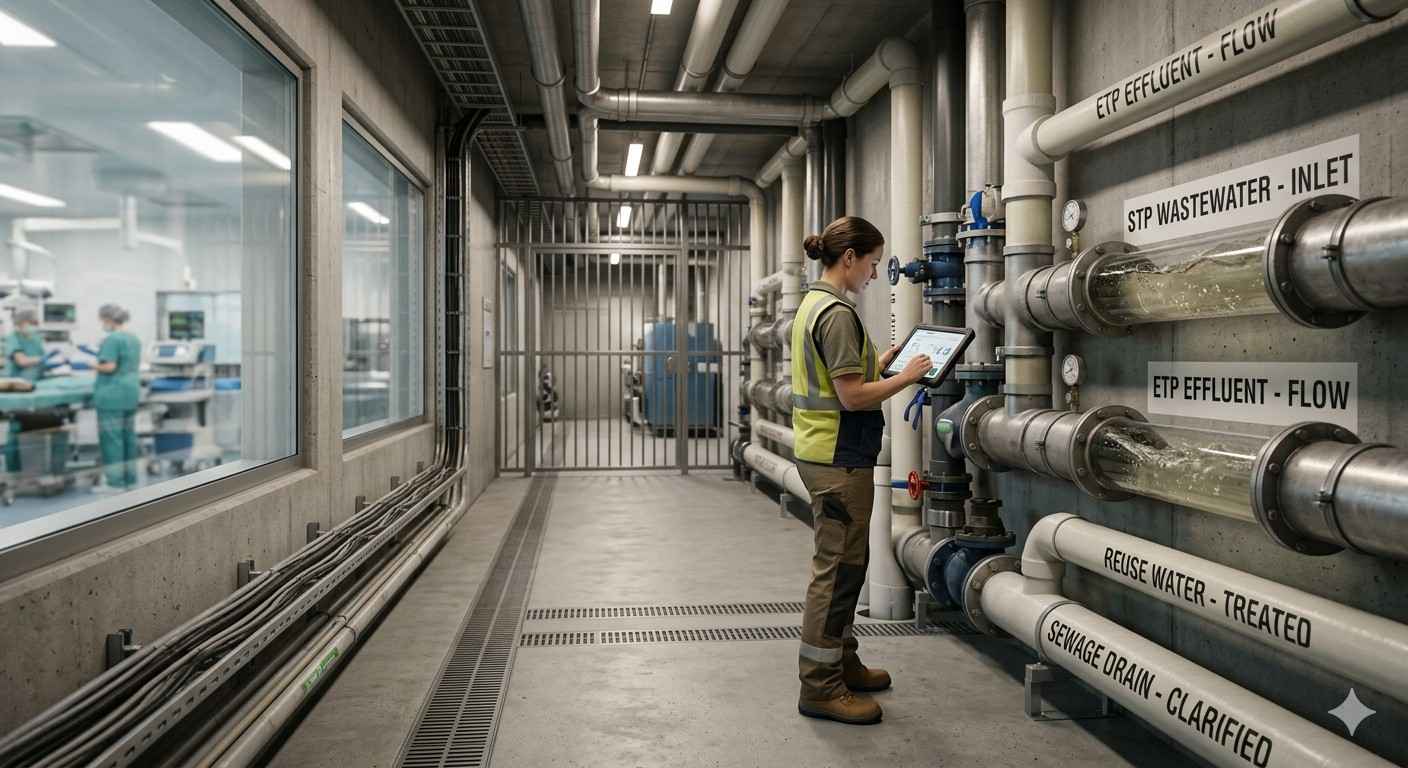
While STP handles domestic discharge, an Effluent Treatment Plant (ETP) is designed for complex wastewater.
Hospitals generate chemical-based effluent from:
- Diagnostic laboratories
- Sample testing units
- Sterilization equipment
- Pharmaceutical preparation areas
These streams may contain chemical compounds that biological processes alone cannot neutralize.
An ETP for hospital wastewater ensures that chemical contaminants are safely treated before discharge.
How the ETP Treatment Process Works
- Chemical Adjustment: The pH level of wastewater is corrected to stabilize reactions.
- Coagulation Reaction: Special agents bind fine particles together, forming larger clusters.
- Separation & Filtration: The formed particles are filtered out using mechanical systems.
- Advanced Polishing: Additional treatment ensures harmful compounds are reduced to safe limits.
Unlike biological treatment, ETP relies heavily on controlled chemical reactions and filtration technology.
Varuna’s ETP solutions are designed to manage fluctuating laboratory discharge volumes common in large healthcare facilities.
Why STP & ETP in Hospitals Are Essential
Installing proper treatment systems is not only about regulations.
They serve critical purposes:
- Protect underground water sources
- Prevent harmful microorganisms from spreading
- Control chemical discharge
- Support sustainable water management
- Reduce environmental liability
In cities facing water stress, treated water reuse becomes an added advantage.
Hospitals equipped with advanced wastewater treatment systems reduce freshwater consumption significantly.
Can Treated Hospital Water Be Used Again?
Yes—but only after thorough treatment.
Water processed through a compliant hospital STP system can be reused for:
- Toilet flushing
- Gardening
- Cooling systems
Recycling treated water reduces operational water costs and supports sustainability goals.
Hospitals implementing reuse strategies often work with environmental engineering firms like Varuna to ensure treatment stability.
Challenges in Hospital Wastewater Treatment
Hospital wastewater systems must handle:
- Sudden load variations
- Mixed discharge streams
- Antibiotic residues
- Limited installation space
- Continuous 24/7 operation
A system designed without accurate load analysis may fail during peak conditions.
That is why proper technical planning is essential. Varuna conducts detailed wastewater assessments to ensure system capacity matches actual hospital operations.
How Varuna Contributes to Safer Hospital Water
Designing effective STP & ETP systems in hospitals requires technical expertise and compliance awareness.
Varuna supports healthcare facilities by:
- Evaluating wastewater characteristics
- Designing customized STP & ETP systems
- Integrating sustainable treatment technologies
- Assisting with regulatory documentation
- Supporting long-term operational monitoring
Rather than offering one-size-fits-all plants, Varuna’s approach focuses on system stability, efficiency, and regulatory alignment.
Looking Ahead: Wastewater Responsibility in 2026
In 2026, healthcare infrastructure is expected to balance patient care with environmental stewardship.
Understanding how STP in hospitals and ETP in hospitals function helps administrators make informed infrastructure decisions.
Through structured treatment stages—physical separation, biological digestion, chemical neutralization, and final disinfection—contaminated water is transformed into environmentally safe discharge.
Hospitals that prioritize proper wastewater systems demonstrate responsibility not only to patients but also to the wider community.
With expert support from experienced providers like Varuna, hospitals can ensure that every drop of used water is treated safely before returning to the environment.
FAQs
1. What is the difference between STP and ETP in hospitals?
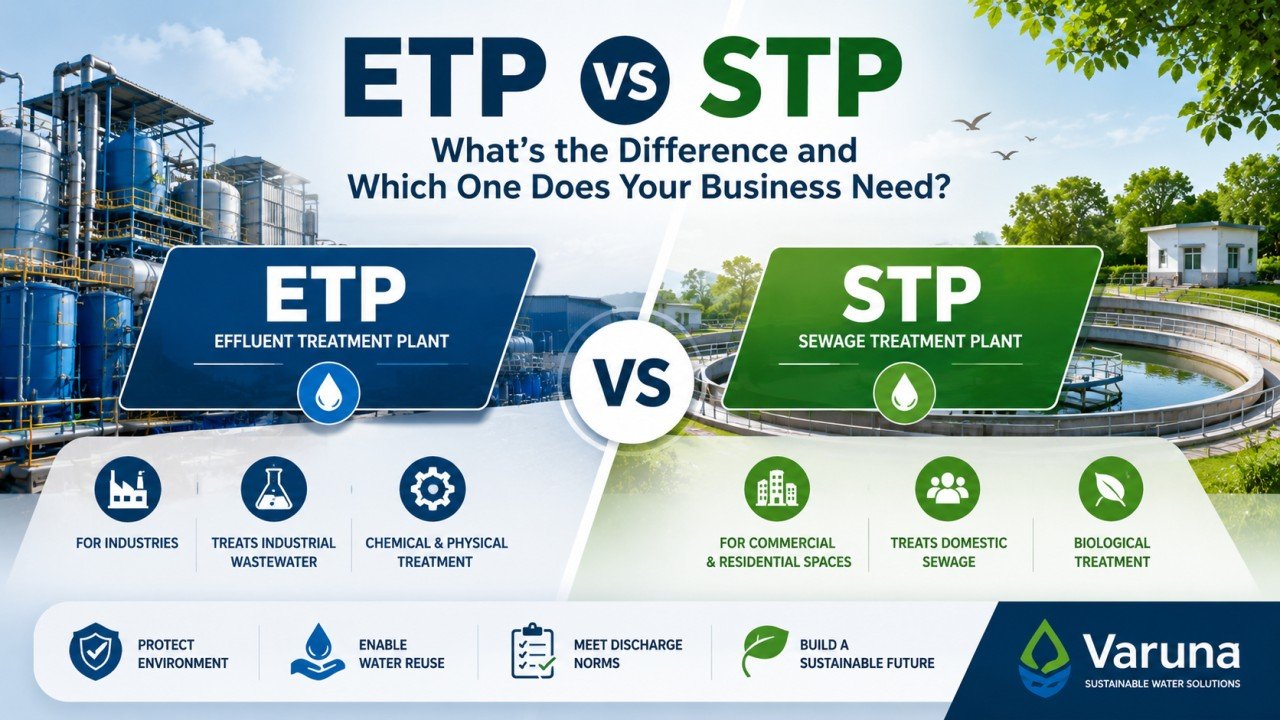
STP treats domestic sewage, while ETP treats chemical and laboratory wastewater.
2. Is wastewater treatment mandatory for hospitals?
Yes, hospitals must comply with environmental norms.
3. How does an STP clean water?
Through screening, settling, biological treatment, and disinfection.
4. Why is ETP important in laboratories?
Because laboratory discharge may contain chemical contaminants.
5. Can treated water be reused?
Yes, for non-drinking applications.
6. What happens if wastewater is not treated?
It may contaminate groundwater and create health risks.
7. How does Varuna help hospitals?
Varuna designs, installs, and supports compliant STP & ETP systems tailored for healthcare facilities.