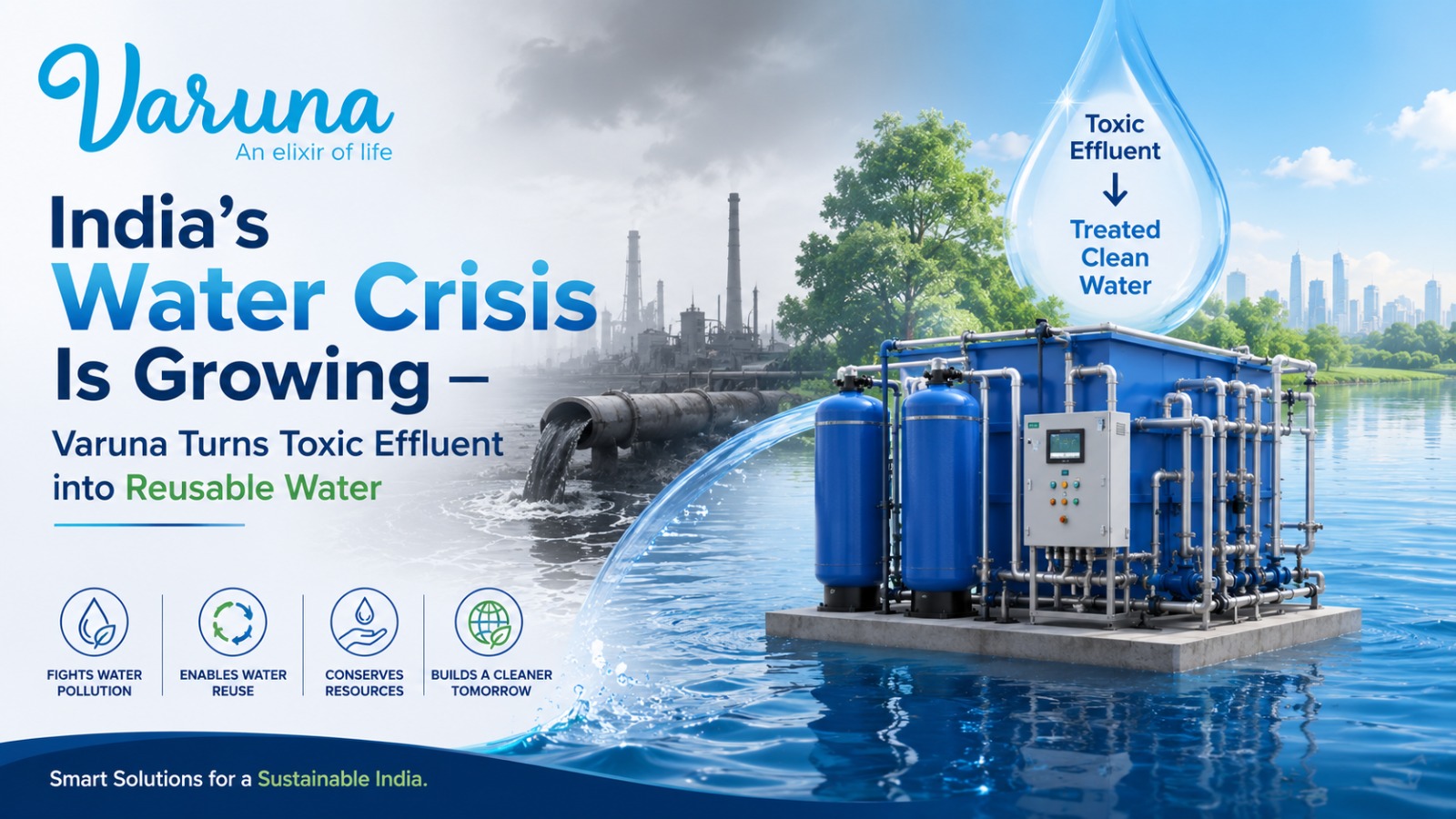
India’s Water Crisis Is Growing — Varuna Turns Toxic Effluent into Reusable Water
Explore how Varuna Eco helps industries combat India’s water crisis with advanced ETP, STP, and wastewater recycling solutions that convert toxic effluent into reusable water.
Water Is Slowly Becoming One of India’s Biggest Operational Challenges.
A few years ago, most industries looked at water as a regular utility expense. It was available, manageable, and rarely part of long-term business planning.
That situation is changing quickly.
Today, many industrial areas already face inconsistent water supply, rising dependency on tankers, and growing pressure on groundwater resources. In some locations, businesses are being forced to rethink how they use water because the old “use and discharge” approach is no longer practical.
At the same time, another reality often goes unnoticed — huge volumes of industrial wastewater still leave factories every day without being reused properly.
What makes this concerning is that much of this wastewater still has recovery potential.
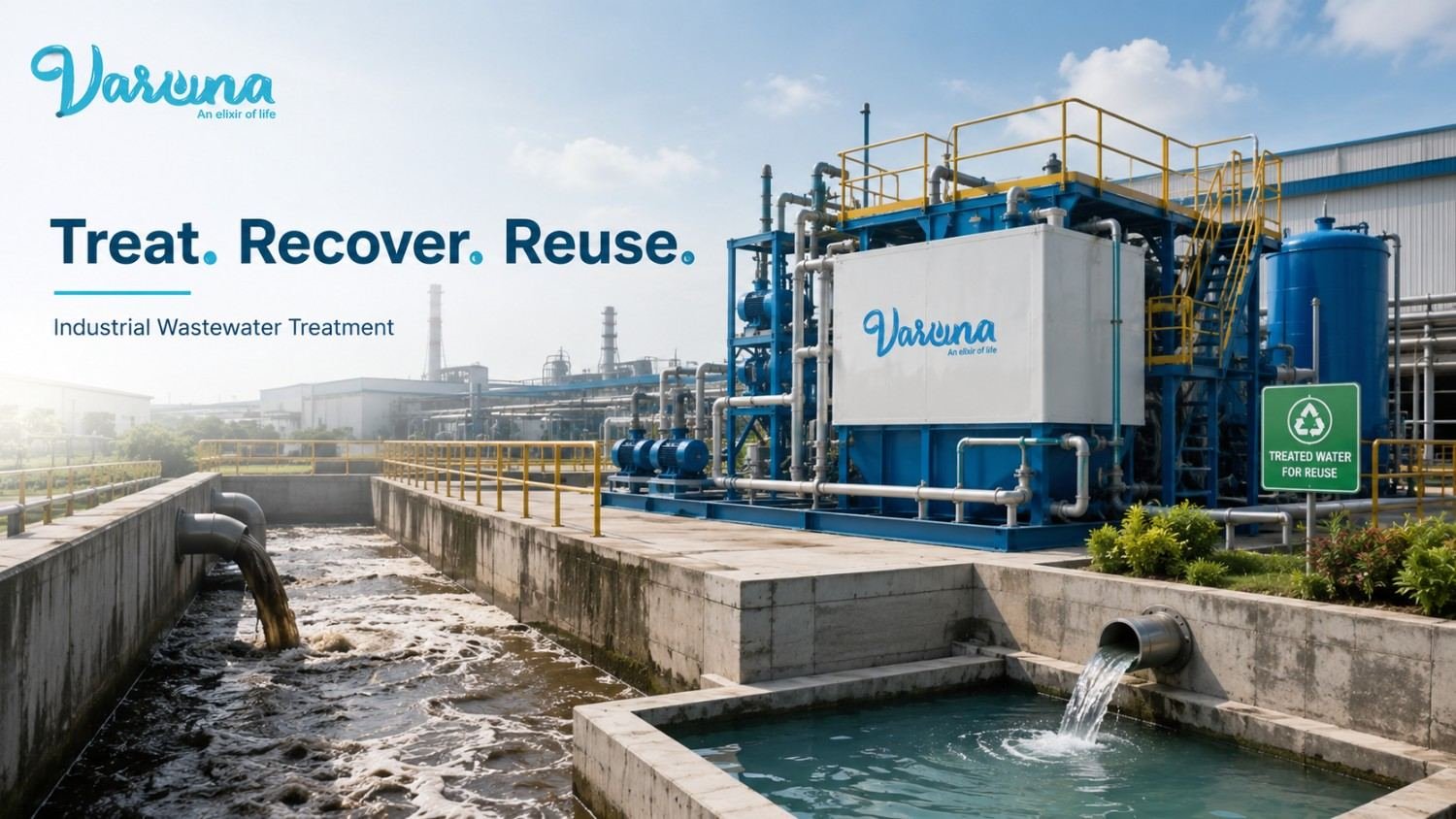
Instead of treating toxic effluent as something that only needs disposal, industries are now beginning to see it differently: as water that can be treated, recovered, and reused again inside operations.
That shift is becoming increasingly important as India’s water pressure continues growing.
The Problem Is Bigger Than Just Water Shortage
When people hear about a water crisis, they usually think about dry reservoirs or lack of rainfall. But industrial wastewater is also part of the problem.
Every manufacturing process depends on water in some form — cooling, washing, processing, cleaning, production, or chemical handling. After use, this water carries contaminants that make direct reuse unsafe without proper treatment.
In many industries, wastewater may contain:
-
chemical residue
-
oil traces
-
heavy sludge
-
suspended particles
-
toxic compounds
If this effluent enters open drains, nearby land, or water bodies without proper treatment, the impact builds slowly over time.
And that is the dangerous part.
Most wastewater damage does not appear immediately. It spreads gradually through soil contamination, polluted drainage systems, and pressure on nearby water resources.
By the time the effects become visible, fixing the damage becomes far more difficult and expensive.
Why Industries Can No Longer Ignore Water Reuse
For a long time, wastewater treatment was treated mainly as a compliance requirement. Businesses installed systems because regulations demanded it.
Now the conversation is changing.
Industries are starting to realize that water reuse directly affects:
-
operational stability
-
long-term costs
-
sustainability goals
-
future resource availability
Freshwater is becoming expensive in many regions. Tanker dependency is increasing. In some industrial belts, groundwater levels continue falling every year.
Because of this, businesses that rely completely on fresh water supply may eventually face serious operational pressure.
This is exactly why industrial wastewater treatment is becoming less about disposal and more about recovery.
Toxic Effluent Does Not Always Look Dangerous
One common misconception is that contaminated water always appears dark, thick, or visibly polluted.
In reality, some industrial discharge may look harmless while still carrying harmful contaminants.
That is why untreated effluent creates long-term environmental risk even when the immediate damage is not obvious.
In several industrial areas, poorly managed wastewater eventually affects:
-
groundwater quality
-
nearby water bodies
-
drainage systems
-
surrounding land condition
And once groundwater becomes contaminated, recovery becomes extremely difficult.
This is one reason why industries are investing more seriously in proper effluent treatment plant systems today.
Wastewater Is Slowly Turning Into a Reusable Resource
The mindset around industrial wastewater is changing faster than before.
Earlier, businesses focused mainly on removing wastewater from the premises as quickly as possible. Now, many industries are trying to recover as much usable water as they can before disposal.
That approach makes practical sense.
A properly designed treatment system can help industries:
-
reduce freshwater usage
-
recover reusable water
-
lower dependency on external water supply
-
improve operational efficiency
Even partial water recovery can create noticeable long-term savings when operations run continuously throughout the year.
This is why more industries are adopting wastewater recycling solutions instead of depending entirely on freshwater intake.
What Actually Happens Inside an Effluent Treatment System?
Many people assume wastewater treatment is extremely complex. The basic idea, however, is straightforward.
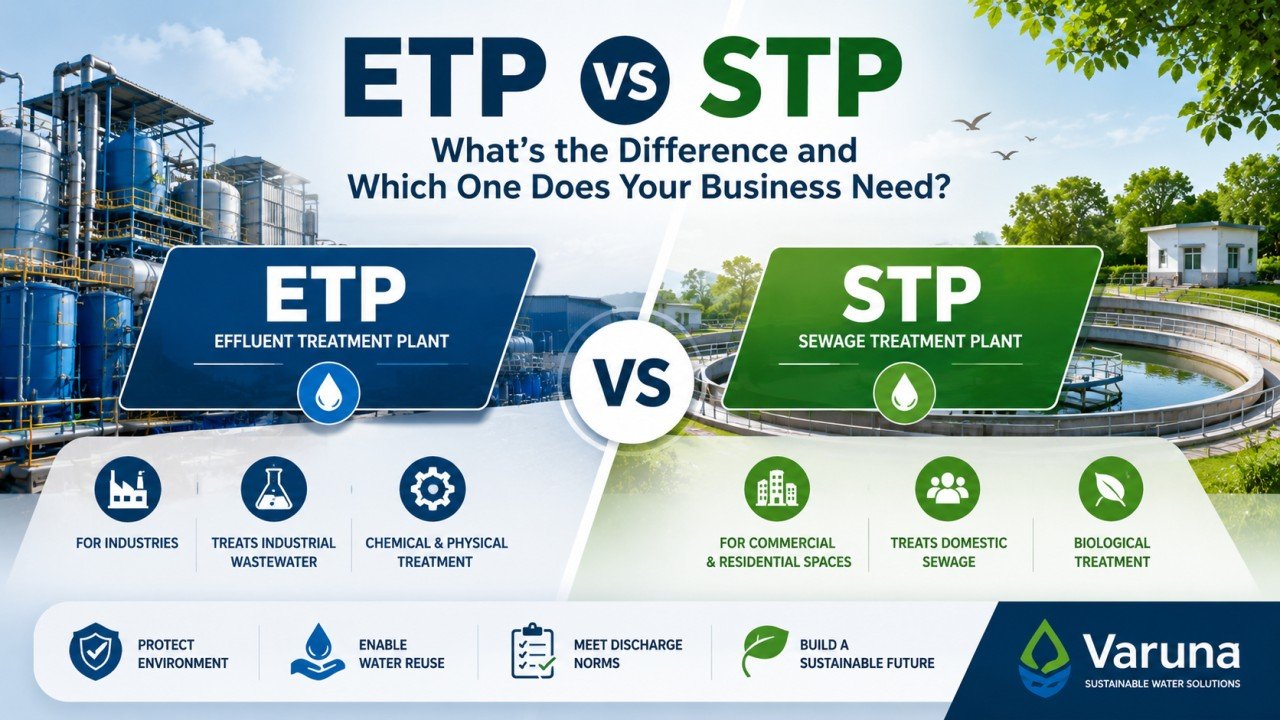
An effluent treatment plant separates contaminants from industrial wastewater so the water becomes safer for reuse or controlled discharge.
Depending on the type of industry, the treatment process may involve:
-
separating sludge and solids
-
removing oil and chemicals
-
filtration
-
biological or chemical treatment
-
water purification stages
After treatment, a portion of the water can often return to operations for secondary applications.
The goal is simple:
waste less water and recover more wherever possible.
Why More Industries Are Looking at Long-Term Water Security
The bigger concern today is not only wastewater disposal. It is future water availability.
Many industrial businesses are beginning to ask:
-
What happens if water costs continue rising?
-
What if groundwater restrictions become stricter?
-
How sustainable is continuous freshwater dependence?
These questions are pushing industries toward smarter water reuse technology and more responsible water management practices.
Businesses that start optimizing water recovery now will likely have stronger long-term flexibility compared to those that continue wasting reusable water.
How Varuna Helps Industries Manage Wastewater More Responsibly
Varuna works with industries that want to move beyond basic wastewater disposal and focus on smarter water management.
Instead of treating wastewater as a problem that simply needs removal, Varuna systems focus on improving recovery, reuse, and long-term efficiency.
Modern Varuna water solutions help industries:
-
improve wastewater treatment efficiency
-
reduce unnecessary water loss
-
support water reuse practices
-
lower freshwater dependency
-
build more sustainable operations
The focus is not only environmental responsibility. It is also about helping industries prepare for future water challenges more practically.
India’s Water Future Will Depend on Smarter Reuse
India’s water demand will continue increasing as industries, cities, and infrastructure keep expanding.
That means businesses can no longer depend only on extracting fresh water repeatedly while discarding reusable wastewater.
The industries that adapt early will likely be in a far stronger position later — operationally, financially, and environmentally.
Water reuse is no longer an optional sustainability trend. It is gradually becoming part of long-term industrial survival.
Conclusion
India’s water crisis is growing quietly, but the pressure is becoming visible across industries and urban areas.
At the same time, large amounts of industrial wastewater still carry untapped reuse potential.
Instead of allowing toxic effluent to become an environmental burden, businesses now have the opportunity to recover and reuse water more efficiently through modern treatment systems.
Advanced Varuna water solutions help industries take a more practical and sustainable approach toward wastewater management — turning what was once treated as waste into something valuable again.