STP & ETP for Hospitals and Medical Institutions: Compliance Guide 2026
Explore STP & ETP compliance for hospitals in 2026. Learn regulations, audit readiness, wastewater management, and sustainable healthcare solutions.
In 2026, hospital wastewater management is no longer treated as a backend engineering detail. It has become a board-level compliance issue.
Healthcare institutions today operate under tighter environmental scrutiny than ever before. With regulatory audits becoming more structured and public accountability increasing, wastewater treatment systems for hospitals must perform consistently—not just exist on paper.
This guide focuses on STP & ETP compliance for hospitals and medical institutions, regulatory preparedness, and institutional risk management — areas where experienced environmental solution providers like Varuna are increasingly working alongside healthcare institutions.
The Compliance Shift in 2026: From Installation to Accountability
Earlier, regulatory focus was largely on whether a treatment plant had been installed.
Now, the focus has shifted to:
- Continuous performance validation
- Data-based reporting
- On-site inspection readiness
- Operational documentation
Authorities no longer evaluate only infrastructure presence. They evaluate hospital wastewater treatment performance under real-world load conditions.
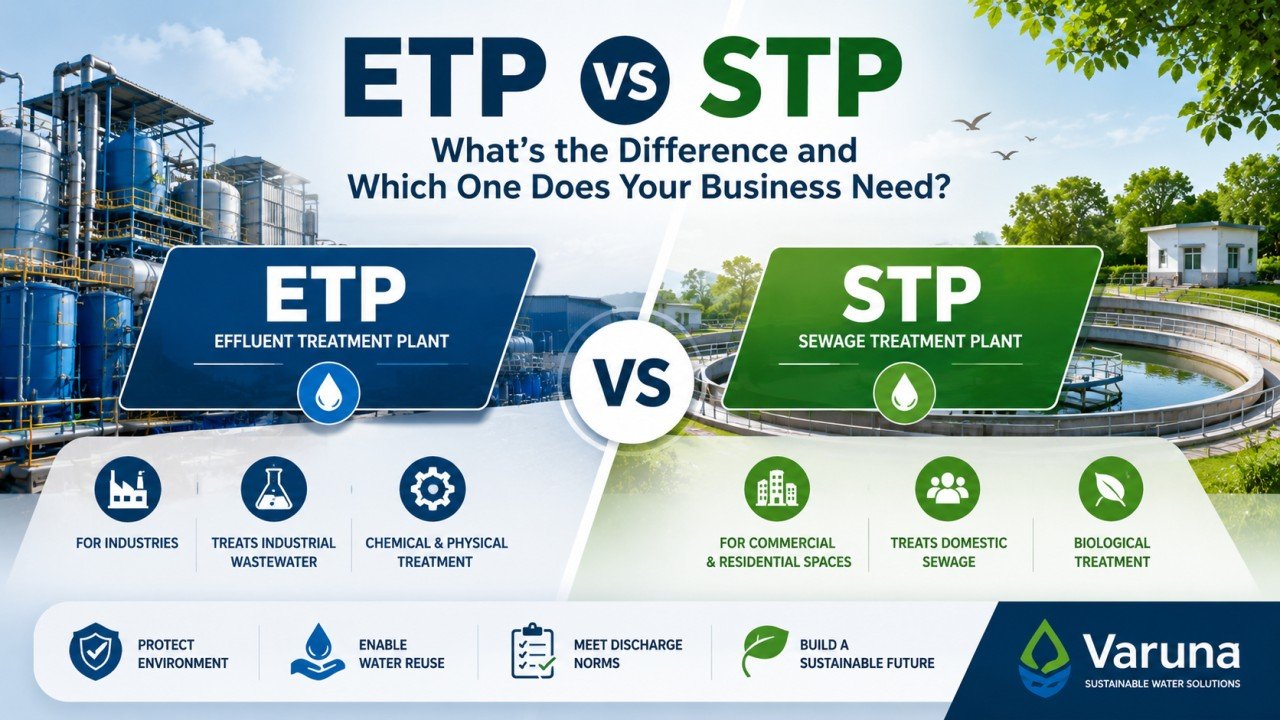
Hospitals must demonstrate that their Sewage Treatment Plant (STP) and Effluent Treatment Plant (ETP) systems function effectively — not just during commissioning. Compliance-focused engineering partners such as Varuna emphasize long-term operational reliability rather than one-time installation.
Institutional Risk: Why Wastewater Is Now a Governance Issue
For medical institutions, environmental non-compliance creates layered risks:
- Regulatory penalties
- Operational suspension
- Reputational damage
- Accreditation impact
Environmental compliance is increasingly linked to institutional credibility. In many regions, failure to meet pollution control norms for hospitals can delay expansion approvals or renewals.
This makes hospital wastewater compliance part of institutional governance — not just infrastructure. Strategic planning supported by experienced firms like Varuna helps institutions mitigate these risks before they escalate.
Audit Preparedness: What Inspectors Actually Look For
When regulatory authorities conduct inspections, they assess more than discharge quality.
Common inspection focus areas include:
- Flow measurement accuracy
- Logbook maintenance
- Sludge disposal records
- Maintenance frequency
- Emergency overflow protocols
Hospitals that treat STP & ETP systems as one-time installations often struggle during inspections.
Operational discipline matters as much as technical design — a principle that Varuna integrates into its compliance-oriented wastewater solutions.
Common Compliance Gaps in Medical Institutions
Across healthcare facilities, recurring issues include:
- Undersized hospital STP systems after expansion
- Inconsistent monitoring of discharge parameters
- Inadequate operator training
- Poor documentation of maintenance cycles
- Overdependence on contractors without internal oversight
These weaknesses often surface during audits related to hospital wastewater treatment compliance. Structured technical audits — such as those conducted by Varuna — help institutions identify and correct these gaps proactively.
Strategic Capacity Planning Beyond Bed Strength
Most institutions calculate system size based only on bed count.
However, STP capacity for hospitals depends on:
- Diagnostic intensity
- Dialysis load
- Surgical volume
- Laboratory activity
- Cleaning protocols
Hospitals expanding specialty services without reviewing their wastewater treatment plant capacity risk exceeding operational limits. Professional capacity assessment, like the planning framework followed by Varuna, ensures systems remain aligned with real discharge loads.
Strategic reassessment should be conducted whenever services expand.
Operational Stability: The Real Compliance Factor
Installing an STP & ETP for hospitals is only the first step. Sustaining compliance requires:
-
Preventive maintenance scheduling
-
Chemical dosing control
-
Equipment calibration
-
Skilled supervision
Many compliance failures occur not because systems were poorly designed — but because hospital wastewater management practices were inconsistent. This is why Varuna emphasizes long-term O&M planning alongside system installation.
Sustainability & ESG in Hospital Wastewater Management (2026)
Environmental performance now directly influences ESG compliance for hospitals.
Institutions pursuing:
- Green building certifications
- International healthcare accreditations
- Public-private partnerships
Must demonstrate effective hospital wastewater treatment systems.
Water reuse, sludge management, and energy-efficient operations are increasingly tied to sustainability reporting. Sustainability-focused wastewater solutions—an area where Varuna actively supports healthcare infrastructure projects—align compliance with long-term environmental goals.
Emerging Technology in STP & ETP for Hospitals
The 2026 compliance landscape shows increased adoption of:
- IoT-based monitoring for hospital STP & ETP systems
- Predictive maintenance tools
- Modular wastewater treatment solutions
- Advanced processes for antibiotic residue reduction
Technology is moving toward transparency and long-term performance assurance. Modern implementations led by companies like Varuna integrate monitoring, automation, and performance tracking to ensure audit readiness at all times.
Choosing the Right Compliance Strategy
Hospitals should evaluate:
- Experience in STP & ETP installation for medical institutions
- Regulatory documentation support
- Upgrade flexibility
- Long-term O&M planning
A wastewater treatment plant is not just infrastructure — it is a compliance asset.
Institutions that approach hospital wastewater compliance in 2026 strategically reduce regulatory risk and operational uncertainty. Partnering with experienced environmental specialists such as Varuna ensures technical reliability and regulatory alignment.
Final Perspective
In 2026, installing and maintaining compliant STP & ETP systems for hospitals and medical institutions is not optional. It is essential healthcare infrastructure.
Environmental oversight is tighter. Documentation requirements are clearer. Monitoring is more transparent.
Hospitals that prioritize hospital wastewater treatment compliance protect not only regulatory status but also institutional credibility.
Sustainable infrastructure today ensures resilient healthcare tomorrow.
Ready to Strengthen Your Hospital’s Compliance Framework?
If your institution is planning a new installation, upgrading an existing system, or preparing for regulatory inspection, the right technical approach can make all the difference.
Varuna supports hospitals and medical institutions with:
- Compliance-focused STP & ETP system design
- Regulatory documentation guidance
- Capacity assessment and technical audits
- Long-term operational planning
Take a proactive approach to hospital wastewater compliance in 2026 — not a reactive one.
Connect with Varuna to evaluate your current infrastructure and build a wastewater treatment strategy that aligns with regulatory expectations and future expansion plans.
Because in healthcare, what happens behind the scenes protects everything happening inside.