Planning Water Storage Infrastructure for Residential Layouts and Townships with Varuna RCC Tanks
Discover how Varuna RCC Tanks help developers plan reliable water storage infrastructure for residential layouts and townships with long-term capacity, durability, and sustainability.
One of the most common mistakes in residential development isn't visible during construction.
In fact, many homebuyers never notice it until years later.
It's inadequate water storage planning.
When a new residential layout is being designed, most discussions revolve around roads, amenities, landscaping, clubhouse facilities, and plot configurations. Water infrastructure is certainly included in the planning process, but it often doesn't receive the same level of strategic attention.
That can become a problem.
Because unlike a delayed amenity or an unfinished landscape feature, water shortages affect residents immediately.
No developer wants residents calling the maintenance office because water pressure has dropped during peak morning hours.
Yet situations like these are often linked to decisions made long before the first resident moved in.
That's why water storage infrastructure deserves a much bigger role during the planning stage of any residential project.
Water Demand Is Changing Faster Than Many Layout Plans
A layout that looks perfectly adequate on paper can face challenges once people actually start living there.
- Families grow.
- Occupancy increases.
- Water consumption patterns change.
- Community facilities expand.
- Additional phases are launched.
What seemed like a sufficient water storage capacity during the design stage may become strained a few years later.
I've noticed that many developers focus heavily on immediate project requirements while underestimating future demand.
It's understandable.
Development timelines are tight. Budgets are carefully managed. There are countless priorities competing for attention.
But water infrastructure isn't something that's easy to expand overnight.
That's why forward-thinking developers increasingly treat water storage as long-term infrastructure rather than a short-term utility requirement.
Why Water Storage Matters More Than Most People Realize
Most residents only think about water when it stops flowing.
When everything works properly, water storage remains invisible.
Yet storage infrastructure performs several critical functions behind the scenes.
- It helps balance fluctuations in demand.
- It provides reserve capacity during supply interruptions.
- It supports fire safety requirements.
- It helps maintain consistent distribution across the community.
And perhaps most importantly, it provides resilience.
Because the municipal water supply isn't always predictable.
Borewell performance can vary.
Seasonal demand can change dramatically.
Without adequate storage, even minor supply disruptions can quickly become resident complaints.
The Challenge of Planning for Peak Demand
Average water consumption figures can be misleading.
The real challenge isn't average demand.
It's peak demand.
Consider a typical township.
At 5 a.m., water usage is relatively low.
By 7 a.m., hundreds of households may be using water simultaneously.
- Showers.
- Kitchens.
- Washing machines.
- Community facilities.
The demand curve changes rapidly.
The same pattern often repeats in the evening.
This is why storage infrastructure needs to be designed around actual usage behavior rather than theoretical averages.
A system that performs well during normal conditions may struggle during peak periods if storage capacity hasn't been planned properly.
Looking Beyond Today's Occupancy
One question developers don't ask often enough is the following:
"What will this project look like five years from now?"
That's where many water infrastructure decisions become more important.
- A residential township that is only 40% occupied today may eventually reach full occupancy.
- Additional amenities may be introduced.
- Commercial spaces may become operational.
- Community water demand may increase significantly.
- Planning water storage based only on current requirements can create limitations later.
A more effective approach is to design infrastructure with future growth in mind.
That doesn't necessarily mean oversizing everything.
It means creating systems that can support long-term expansion without major disruption.
Why RCC Water Storage Tanks Remain a Preferred Choice
Over the years, water storage technologies have evolved, but RCC tanks continue to play a major role in large residential developments.
There are several reasons for this.
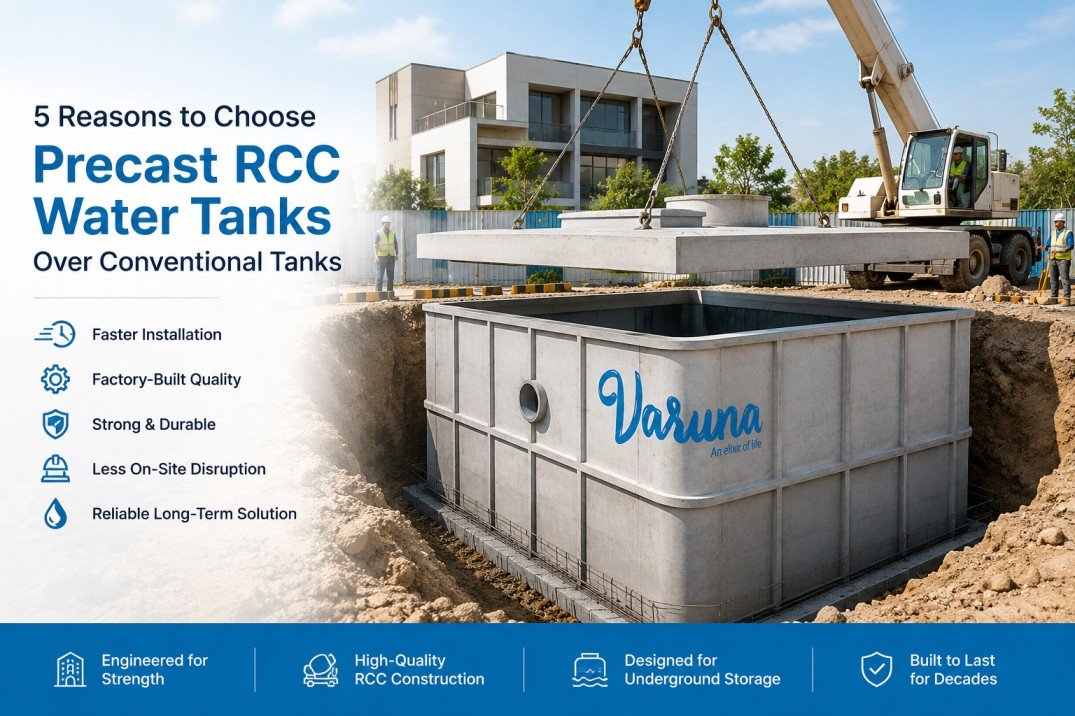
First, they offer long service life.
Developers typically view water infrastructure as a decades-long investment rather than a short-term installation.
Second, RCC tanks can be designed to accommodate substantial storage capacities, making them suitable for layouts, gated communities, and integrated townships.
Third, they provide structural durability and reliability under varying environmental conditions.
When properly designed and constructed, RCC tanks can support long-term water management requirements with relatively low maintenance requirements.
For large-scale developments, those factors matter.
Where Varuna RCC Tanks Fit Into Modern Township Planning
Water storage isn't simply about creating capacity.
It's about creating reliability.
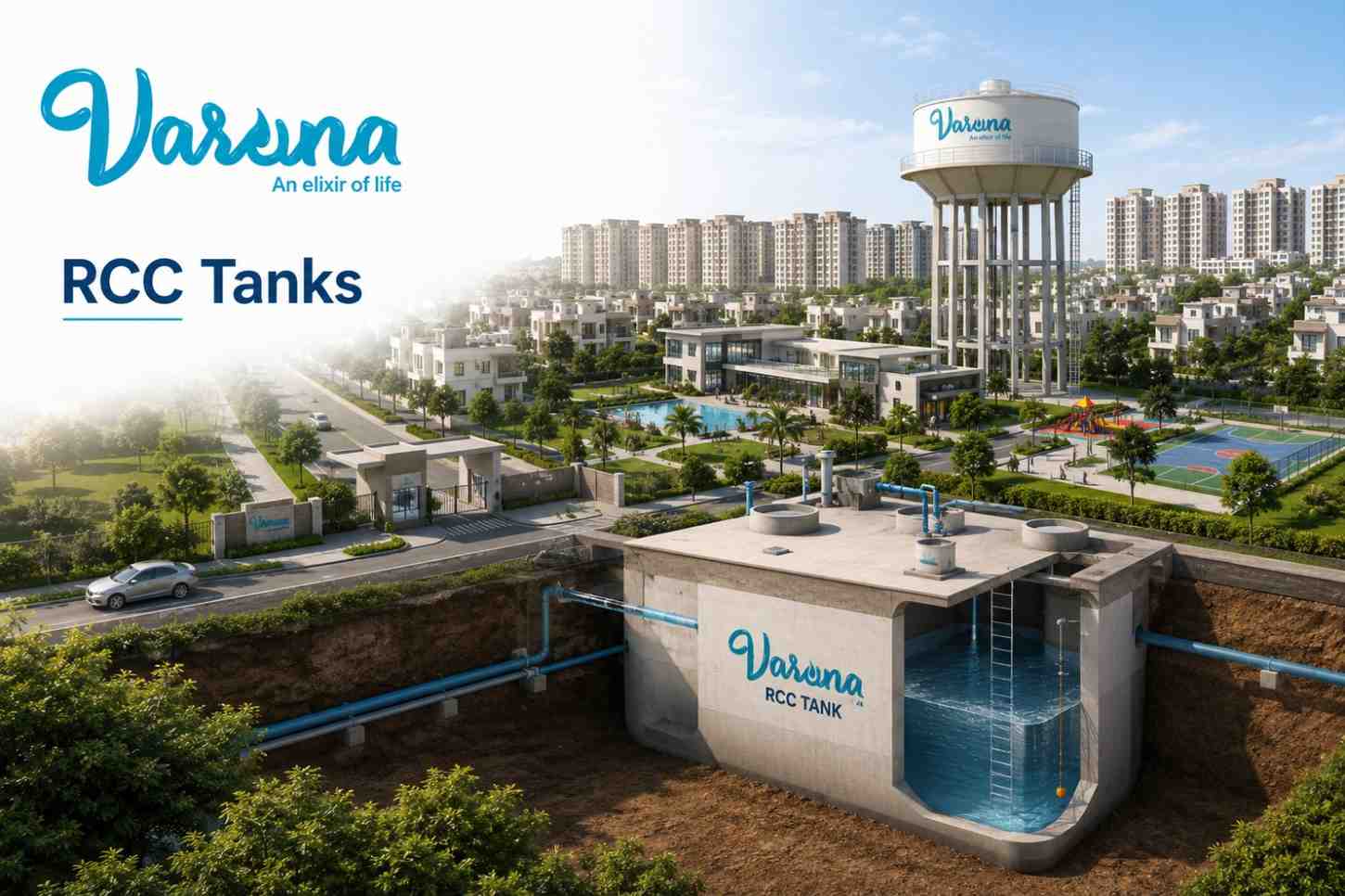
That's where Varuna RCC Tanks become part of a broader infrastructure strategy.
Rather than viewing storage tanks as isolated structures, developers can integrate them into a comprehensive water management plan that supports:
- Domestic water requirements
- Fire water storage
- Community facility operations
- Emergency reserve capacity
- Future expansion requirements
This approach helps ensure that water remains available when residents need it most.
Because from a resident's perspective, the success of a water storage system is remarkably simple.
They shouldn't have to think about it.
If water is consistently available, pressure remains stable, and supply interruptions are minimized, the infrastructure is doing its job.
Sustainability Starts with Better Infrastructure Planning
Water sustainability is often discussed in terms of conservation.
That's important.
But infrastructure planning plays an equally important role.
Efficient storage helps reduce water losses.
It improves distribution efficiency.
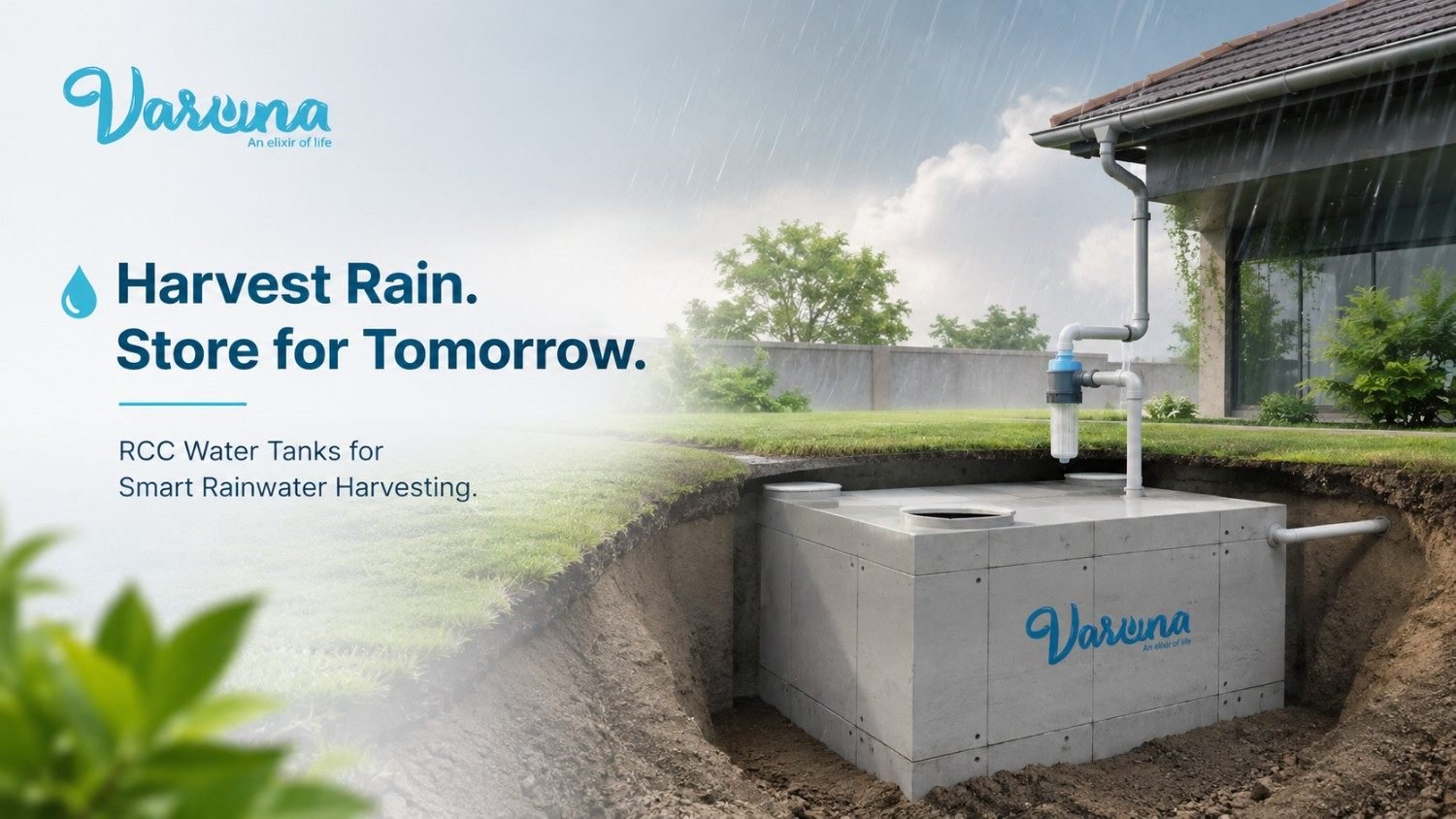
It supports rainwater harvesting integration.
It creates opportunities for better resource management across the entire development.
In many ways, sustainability begins long before residents move in.
It begins during design.
The Bigger Picture
Residential developments are becoming larger and more complex.
Townships today often function like small cities.
They include residential clusters, commercial spaces, recreational facilities, schools, healthcare services, and community infrastructure.
As these developments grow, water planning becomes increasingly important.
Storage infrastructure is no longer just a technical requirement buried within engineering drawings.
It's a critical component of long-term project success.
Developers who recognize this early are often better positioned to deliver reliable services, reduce operational challenges, and create stronger resident experiences.
Final Thoughts
Good water infrastructure rarely attracts attention.
And that's usually a sign that it's working.
Residents don't celebrate water storage tanks.
They simply expect water to be available whenever they turn on a tap.
Meeting that expectation requires careful planning, realistic demand forecasting, and reliable infrastructure.
That's why water storage should never be treated as an afterthought in residential layouts and townships.
With the right planning approach and dependable solutions such as Varuna RCC Tanks, developers can build communities that are better prepared for growth, more resilient to supply challenges, and capable of supporting residents for years to come.
Because in the end, successful water infrastructure isn't measured by the size of the tank.
It's measured by the confidence residents have that the water they need will always be there.