How an Effluent Treatment Plant Works — From Varuna’s Perspective
Discover how an Effluent Treatment Plant (ETP) works through Varuna’s smart, modular, and IoT-enabled approach. This detailed guide explains the ETP process, costs, compliance, industries served, and how Varuna delivers sustainable, CPCB-compliant wastewater treatment solutions across India.
Introduction: Why ETPs Matter
In a world where water scarcity and pollution are becoming ever more pressing, industrial wastewater has emerged as a key environmental and regulatory challenge. Many industries generate effluent that contains organic pollutants (like BOD and COD), suspended solids, oils & grease, and other contaminants. If untreated, this effluent can damage ecosystems, pollute water bodies, and land businesses in heavy fines or shutdowns.
That’s where Effluent Treatment Plants (ETPs) come in. These are not just compliance tools — they’re strategic investments that help industries recycle water, reduce fresh-water consumption, cut costs, and meet ESG (Environmental, Social, Governance) goals.
At Varuna, we design, build, and operate ETPs with a strong engineering backbone, leveraging modular precast RCC tanks and IoT-driven automation to deliver high performance, fast deployment, and long-term reliability. In this post, I’ll walk you through how an ETP works — using Varuna’s philosophy, technology, and real-world learnings — so you (as a business owner, environmental manager, or sustainability lead) can understand what goes into a smart, modern ETP.
Varuna’s Background & Philosophy
A Bit About Varuna
- Varuna Wastewater Technology (also known as Varuna Eco) is headquartered in Bangalore and was established in 2018. varunaeco.com
- The company has 12+ years of domain experience in water and wastewater management. varunaeco.com
- They have completed 500+ projects across 20+ Indian states. varunaeco.com
- Their product portfolio includes ETPs, STPs, Water Treatment Plants (WTPs), Industrial RO Systems, Precast RCC Tanks, Rainwater Harvesting, and more. varunaeco.com
Mission & Vision
- Varuna’s mission is to deliver smart, reliable, and eco-friendly solutions that help clients reduce their environmental impact. varunaeco.com
- They emphasize customization, sustainability, innovation, and regulatory compliance across all their systems. varunaeco.com
- Their vision is to become one of India’s most innovative and dependable water-management companies. varunaeco.com
What Is an ETP — The Basics
Definition and Purpose
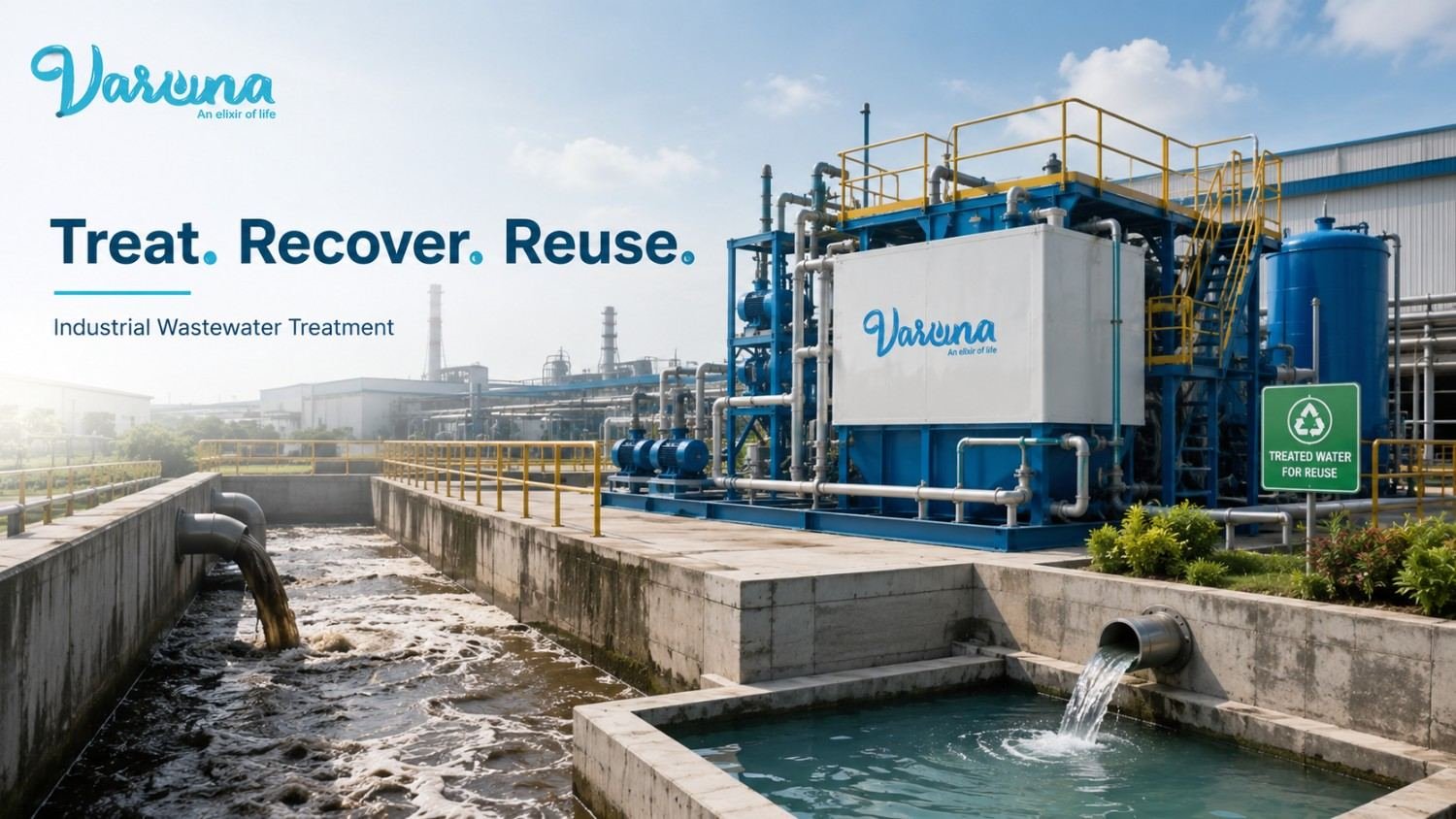
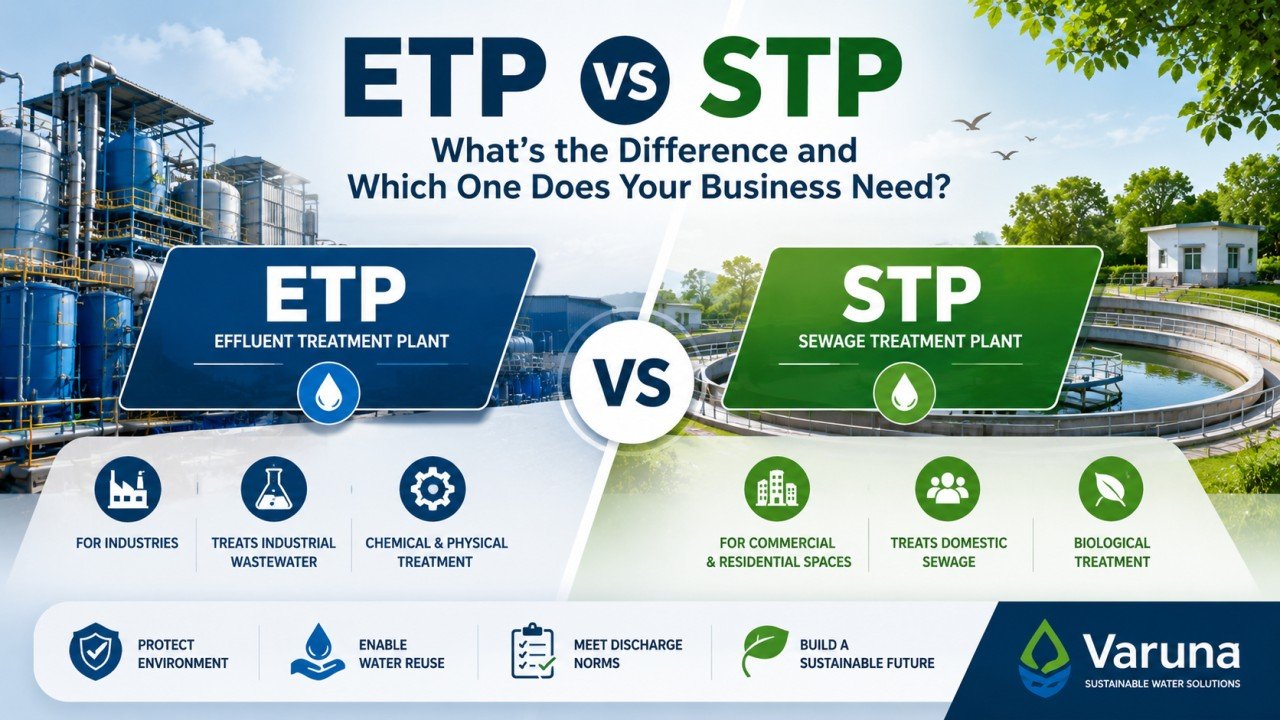
An Effluent Treatment Plant (ETP) is a system designed to treat industrial wastewater before it is either discharged into the environment or reused in the plant. Varuna’s ETPs are specifically designed to remove:
- BOD (Biological Oxygen Demand)
- COD (Chemical Oxygen Demand)
- TSS (Total Suspended Solids)
- Oil & Grease
- Other industry-specific contaminants varunaeco.com
The goal is twofold:
- Environmental Protection — Ensuring that effluent released meets stringent pollution norms (e.g., CPCB) so that ecosystems are not harmed.
- Resource Efficiency — Enabling water reuse (after appropriate treatment) to reduce fresh-water intake and operational costs.
Who Needs an ETP?
Industries that generate significant and potentially hazardous wastewater — such as pharmaceuticals, chemicals, textiles, dairy, food processing, refineries, and automotive servicing — often require robust ETP systems varunaeco.com. An untreated industrial effluent can lead to legal issues, environmental damage, reputational risk, and high water costs.
How Varuna’s ETP Works — The Process Explained
Varuna’s ETPs typically operate through a multi-stage purification process. Their design philosophy leans toward modular, scalable units with real-time monitoring. Here’s a step-by-step breakdown:
-
Preliminary Treatment
-
- Screening: Removal of large solids, debris, plastics, paper, etc. varunaeco.com
- Oil & Grease Trap: Dedicated units to capture floating oils and grease before they enter the main treatment flow. varunaeco.com
-
Primary Treatment
-
- Sedimentation / Clarification: Tanks where heavier particles settle out under gravity. varunaeco.com
- Chemical Coagulation & Flocculation: Chemicals are added (coagulants, flocculants) to help suspended particles clump together and settle. varunaeco.com
-
-
Secondary (Biological) Treatment
-
-
-
- This is where biological processes kick in. Varuna’s ETPs often use bacteria to break down organic matter (COD, BOD). varunaeco.com
- Technologies include aeration tanks, activated sludge, and Moving Bed Biofilm Reactors (MBBR). varunaeco.com
- The biological step is critical to reduce organic load in a cost-effective way.
-
-
-
Tertiary Treatment
-
-
-
- After biological treatment, further polishing is done to meet discharge or reuse standards. Varuna uses processes like: filtration, UV disinfection, reverse osmosis (RO), and advanced oxidation. varunaeco.com
- This stage ensures that the treated water is sufficiently clean — either for safe discharge (CPCB compliance) or for reuse in industrial processes.
-
-
Sludge / Residuals Handling
-
While Varuna’s site does not detail every sludge-handling method, typical operations would involve thickening, dewatering, and safe disposal. Given their biological stage, they likely manage biological sludge responsibly and may handle it via dewatering + disposal or safe reuse.
-
-
Automation & Monitoring (IoT)
-
- One of Varuna’s differentiators is sensor-driven, IoT-enabled operation. They monitor key parameters (e.g., BOD, COD, flow, pH) in real-time. varunaeco.com
- Their systems include real-time data logging, remote diagnostics, and automatic alerts, enabling proactive maintenance and compliance assurance. varunaeco.com
- They also support CPCB audit & reporting, helping clients meet regulatory obligations more easily. varunaeco.com
Designing for Different Industries & Capacities
Capacity Ranges
Varuna customizes ETPs based on the industry’s wastewater volume, often measured in KLD (Kilo Liters per Day). According to their specifications: varunaeco.com
|
Industry |
Typical ETP Capacity (KLD) |
|
Textile & Garments |
50 – 500 |
|
Pharmaceuticals |
10 – 250 |
|
Chemical Plants |
100 – 1,000 |
|
Dairy / Meat Processing |
20 – 300 |
|
Food Processing |
30 – 500 |
|
Ready Mix Concrete |
15 – 100 |
These are not rigid limits — Varuna emphasizes customizability, meaning they tailor the plant's capacity, treatment modules, and architecture to the client’s specific load, space, and effluent characteristics. varunaeco.com
Construction Approach: Modular vs Civil
-
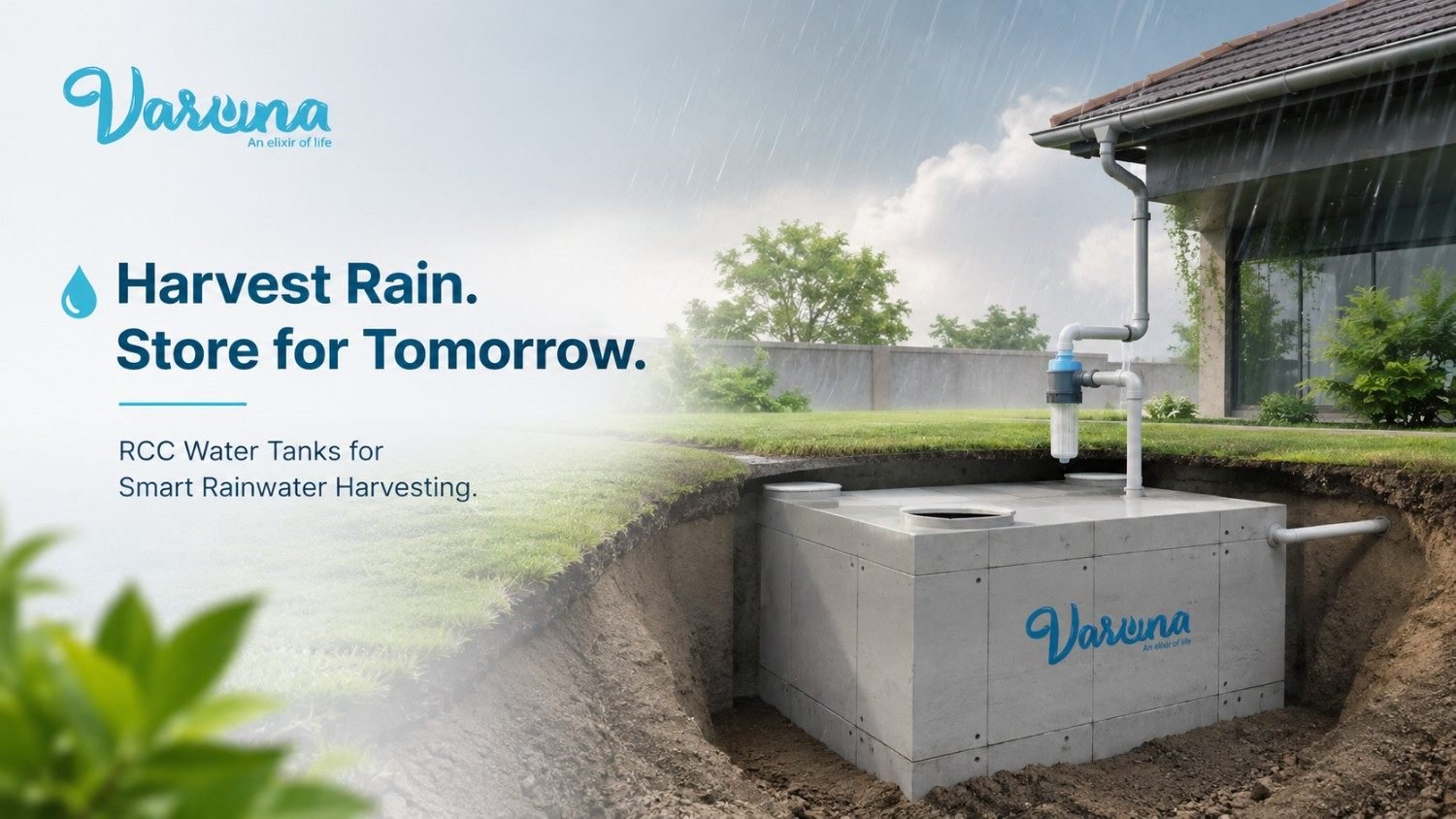
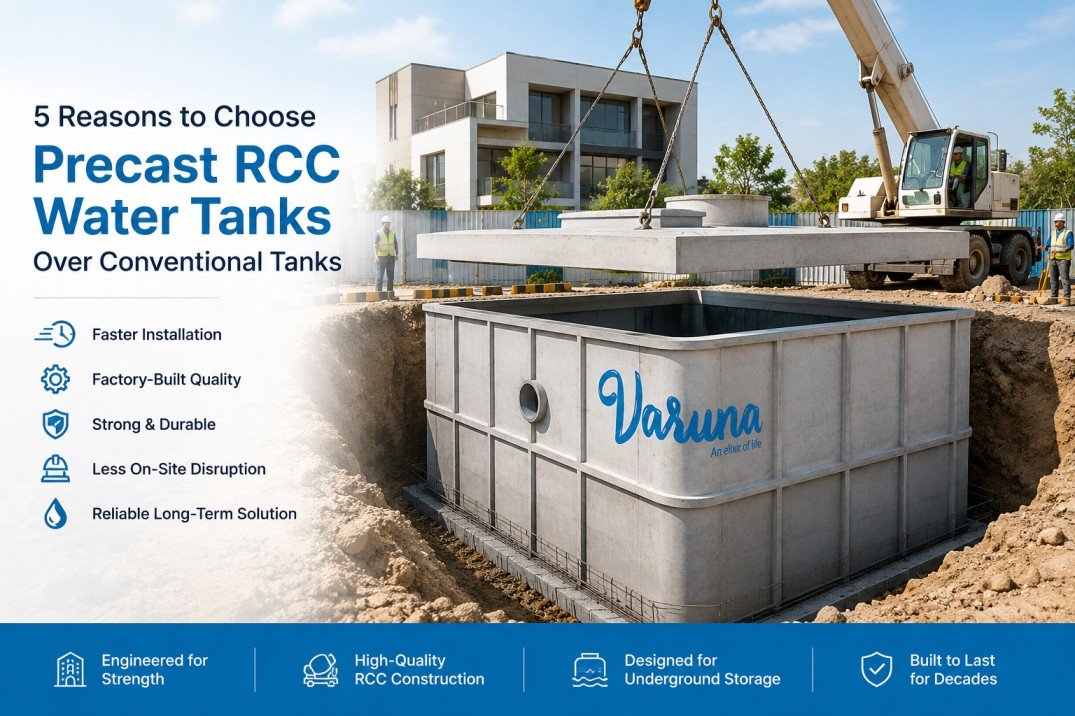
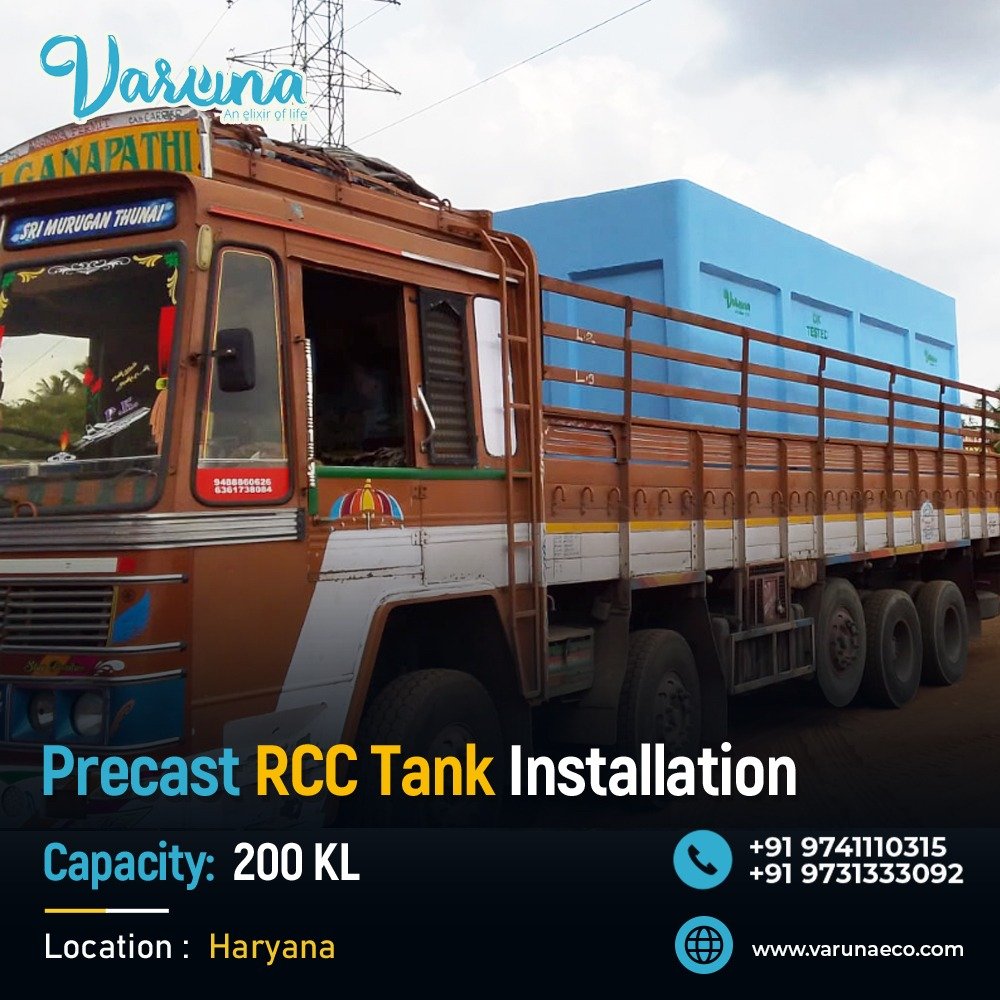
- Precast RCC Modular Tanks: One of Varuna’s major advantages is their use of factory-made RCC (Reinforced Cement Concrete) tanks. These tanks are delivered fully cured, installed with minimal civil work, and drastically reduce on-site construction time. varunaeco.com
- Installation Time: For precast modular ETPs, Varuna claims delivery in 7–10 days and installation in 10–15 days. varunaeco.com
- Traditional Civil Construction: For clients who prefer cast-in-situ or have site constraints, Varuna offers classical civil-based construction as well, but it takes longer (e.g., 30–45 days for delivery, 60–90 days for installation, according to their page). varunaeco.com
Cost Structure & What Affects It
Understanding the cost of an ETP is critical, and Varuna provides transparent, guideline-level pricing to help clients plan.
General Cost Guidelines (INR) — as per Varuna: varunaeco.com
- 10–50 KLD: ₹ 6–15 Lakhs
- 50–100 KLD: ₹ 15–30 Lakhs
- 100–250 KLD: ₹ 30–60 Lakhs
- 250 KLD+: ₹ 60 Lakhs and above
Factors That Influence Cost:
- Civil vs Precast Construction: Precast RCC is faster but may have higher logistics costs; civil work is more labor-intensive and slower but can adapt more to site constraints. varunaeco.com
- Level of Automation: Using PLC/SCADA, sensors, IoT monitoring, real-time dashboards adds to the capital cost but reduces long-term operational risk. varunaeco.com
- Treatment Modules: The choice of secondary (e.g., MBBR) and tertiary (e.g., RO, UV) modules influences cost. Advanced oxidation or RO will be more expensive than basic filtration. varunaeco.com
- Site Challenges: Terrain, accessibility, space, and civil readiness (excavation, foundation) also impact pricing. varunaeco.com
Compliance & Regulatory Assurance
One of the most critical reasons industries invest in ETPs is regulatory compliance — especially with CPCB (Central Pollution Control Board) norms in India.
Key Parameters Varuna Targets (as per their design guidelines): varunaeco.com
- BOD: ≤ 30 mg/L
- COD: ≤ 250 mg/L
- TSS: ≤ 100 mg/L
- Oil & Grease: ≤ 10 mg/L
- pH: 5.5 – 9.0
How Varuna Helps Clients Stay Compliant:
- Their real-time monitoring and IoT-enabled panels continuously track water quality parameters and alert when thresholds are breached. varunaeco.com
- They provide CPCB audit and report assistance, which helps clients during compliance inspections, regulatory filings, and audits. varunaeco.com
- Because of their modular design and sensor-driven control, clients can proactively manage treatment performance — minimizing the risk of regulatory non-compliance.
Operation, Maintenance & Remote Monitoring
An ETP isn’t just about building and commissioning — long-term operation is where real value (and risk) lies.
Post-Installation Support:
- Varuna offers Annual Maintenance Contracts (AMCs), which include routine audits, spare parts, diagnostics, and preventive maintenance. varunaeco.com
- Their systems are built for “easy operation”: even non-specialist plant personnel can manage day-to-day functioning with the right training.
IoT & Remote Diagnostics:
- The treatment plant comes with IoT dashboards that provide real-time monitoring of critical indicators (flow, BOD/COD, pH, etc.). varunaeco.com
- When something deviates, the system can raise alerts. Varuna’s team can remotely diagnose issues, reducing downtime and optimizing response. varunaeco.com
- Data logging ensures that historical trends can be tracked, performance evaluated, and regulatory reports prepared with documented proof.
Case Studies & Real-World Examples
Here are some concrete examples from Varuna’s work to illustrate how their ETPs work in practice:
40 KLD ETP for a Laundry Facility (Hyderabad)
- Varuna dispatched a fully prefabricated 40 KLD ETP to a commercial laundry in Hyderabad. varunaeco.com
- This is a good example of modular, plug-and-play design for high-load, high-usage laundry wastewater.
- Through this plant, the laundry can treat its effluent, likely recycle a portion, and reduce the risk of discharge violations or water scarcity cost. (While Varuna does not publicly give all inlet/outlet data on that project in the snippet, the very fact of their modular solution shows speed, cost efficiency, and effectiveness.)
Vehicle Wash / Nano-ETP
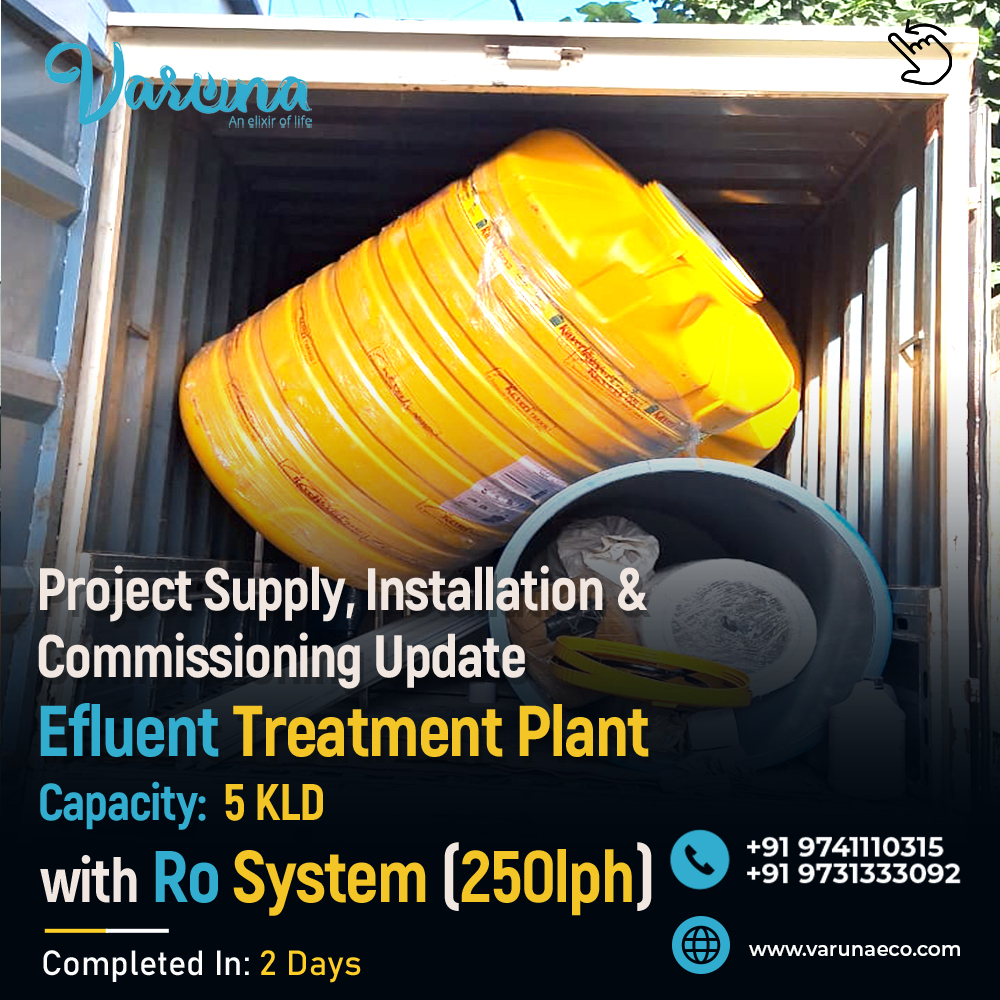
- Varuna’s homepage highlights a 5 KLD Nano Effluent Treatment Plant installed at a vehicle-wash facility in Bengaluru. varunaeco.com
- This compact system was commissioned in just 2 days. varunaeco.com
- Purpose: to recycle wash water, saving water and reducing fresh water costs, while making the wash business more environmentally responsible.
Although Varuna’s website doesn’t publicly detail all performance metrics (e.g., exact COD/BOD reduction, payback), these deployments illustrate their ability to handle small-scale, high-frequency effluent streams (like vehicle washes) and mid-scale industrial wastewater (like laundry) with modular, fast-turnkey solutions.
Sustainability & Business Impact
Water Reuse & Savings
- By enabling treated water reuse (post tertiary treatment like RO / UV), Varuna’s ETPs help industries significantly cut fresh-water intake. varunaeco.com
- This not only conserves water but also reduces procurement costs (especially critical in water-stressed geographies).
ESG & Brand Value
- Installing a smart ETP aligns with ESG goals — environmental protection, resource efficiency, and operational transparency.
- Clients can showcase their sustainability commitment to stakeholders, investors, regulators, and customers — building a stronger, greener brand reputation.
Long-Term ROI
- While the CAPEX can be significant, savings from water reuse, penalties avoided (for non-compliance), and lower operating risk (thanks to automation) make the business case strong.
- The modular, precast design also reduces construction timelines, minimizing disruption and accelerating return on investment.
Challenges & Common Mistakes (and How Varuna Solves Them)
In my experience (based on Varuna’s model), here are some common pitfalls companies fall into when planning or operating an ETP — plus how a company like Varuna helps mitigate them:
-
Underestimating Inlet Variability
-
Mistake: Many clients assume their effluent characteristics (flow, contamination levels) are stable. But in reality, industrial processes fluctuate.
-
Varuna’s Fix: They begin with a detailed effluent audit and design the system to be flexible (modular biological reactors, buffer capacity, real-time monitoring).
-
Neglecting Long-Term OPEX
-
Mistake: Focusing only on CAPEX and ignoring maintenance, energy, sludge disposal.
-
Varuna’s Fix: They advocate for AMCs, remote diagnostics, IoT dashboards, and scheduled maintenance to keep OPEX predictable.
-
Slow or Disruptive Civil Construction
-
Mistake: Traditional ETP construction (cast-in-situ) can take months, disrupt operations, and inflate costs.
-
Varuna’s Fix: Use of precast RCC tanks, which are factory-made and ready to install, dramatically shortening timelines. varunaeco.com
-
Regulatory Risk
-
Mistake: Companies don’t fully plan for CPCB / SPCB audits or data documentation.
-
Varuna’s Fix: Their systems log data, generate compliance reports, and they also support audit preparation and CPCB report documentation. varunaeco.com
-
Poor Stakeholder Buy-in
-
Mistake: ETP is often viewed only as a cost center, not a value driver.
-
Varuna’s Fix: They help clients frame ETPs as ESG assets — water savings, regulatory security, sustainability branding.
Advice for Businesses Considering an ETP
If you are evaluating an ETP for your plant or operation, here are five practical recommendations, based on Varuna’s experience:
-
Conduct a Detailed Effluent Audit Before Design
-
Understand your daily flow, peak loads, pollutant concentrations (BOD, COD, TSS, oil)
-
Use this data to design a plant that’s neither over- nor under-sized
-
Don’t Just Focus on CAPEX — Model OPEX Too
-
Ask vendors for operating estimates (power, chemicals, sludge disposal)
-
Factor in AMC, remote-monitoring fees, and maintenance in your ROI model
-
Consider Modular Design
-
If space or time is constrained, modular precast RCC plants (like Varuna’s) can save weeks or months in implementation
-
Modular systems are also more scalable and can often be expanded later
-
Incorporate Automation from the Start
-
Real-time sensors, IoT dashboards, remote alerts give you operational visibility
-
These features help you avoid regulatory non-compliance events and allow predictive maintenance
-
Factor in Regulatory Support
-
Choose a vendor who can help with CPCB/SPCB audit documentation, data logging, and compliance reporting
-
This reduces your regulatory risk significantly
Future Trends & Varuna’s Vision
Looking ahead, the ETP space is evolving rapidly — and Varuna is well-positioned to ride (and lead) that wave.
- Digitalization: More advanced IoT, AI-enabled predictive maintenance, and analytics will make ETPs smarter, more efficient, and more autonomous.
- Circular Water Economy: As water stress intensifies, companies will increasingly demand zero-liquid discharge (ZLD) or high-reuse solutions. Vendors like Varuna, with modular + membrane + automation capabilities, will be central to that transition.
- ESG Integration: ETPs will be seen more as ESG infrastructure, not just environmental compliance — meaning financial models will tie ETP investments to sustainability reporting and green financing.
- Decarbonization: Future ETPs will aim for lower energy footprints, possibly incorporating renewable energy, energy recovery, or low-energy biological processes.
Varuna’s modular, technology-enabled approach — combined with its experience, pan-India reach, and customer-first thinking — sets it up well to support this transformation.
Conclusion
An Effluent Treatment Plant isn’t just a compliance checkbox — when done right, it’s a strategic asset for business resilience, sustainability, and cost savings. At Varuna, our ETPs combine sound engineering, modular design, and real-time digital monitoring to deliver high performance, regulatory peace-of-mind, and long-term value.
If your business is producing industrial wastewater — whether from laundry operations, chemical processes, or vehicle wash facilities — you owe it to yourself (and the planet) to understand how a smart ETP can work for you.
Call to Action
Ready to explore an ETP for your facility? Here’s what you can do:
-
Request a Quote: Reach out via Varuna’s website and get a detailed proposal tailored to your capacity and effluent characteristics. varunaeco.com
-
Schedule an Audit: Let Varuna conduct an effluent and site audit to understand your water flows and pollutants.
-
Plan for a Pilot: Start with a modular system (e.g., 10–50 KLD) to prove the value, then scale up.
By choosing the right partner, you can turn wastewater from a liability into a managed, reusable resource — all while strengthening your sustainability credentials and operational resilience.